
What to Know Before Buying a Portable Swimming Pool
You want a portable pool, but the choices blur together fast. Frame, inflatable, rigid, and even one-piece shells all come with different site needs and hidden costs. If you’re trying to fit a pool into a tight yard, avoid sketchy deals, and keep upkeep manageable, start here.
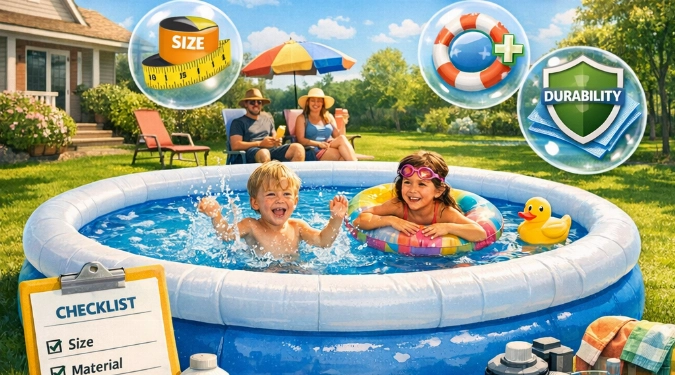
Measure your yard, pick a pool type, and avoid the five mistakes that ruin most first setups. This guide shows real size targets, price ranges, and what the ground must look like. You’ll also get a tight shopping checklist, brand names to compare, and care steps that keep water clear.
Start With Space And Placement
Portable pools fail more from bad placement than bad products. Measure the flat, usable area, not the whole yard. Leave at least 3 feet of walking space on all sides.
Check overhead clearance for branches and power lines. Keep the pool away from septic fields and buried utilities. Call 811 before you level or anchor anything.
Pick the sunniest spot you can. More sun means warmer water. It also means faster chlorine loss, so plan for a cover.
Choose The Right Portable Pool Type
Inflatable Ring
These are the fastest setups and the least durable. They work best for short seasons and light use. Expect more puncture risk from pets and toys.
Metal Frame
Frame pools handle active kids better. Look for powder-coated legs and a strong liner. Intex Prism Frame and Bestway Steel Pro MAX are common picks.
Rigid Wall
Rigid panels feel closer to traditional above ground pools. They cost more and take longer to level. Steel or resin walls resist bowing better than thin sheet metal.
Hard Shell Options
A molded pool is usually a fiberglass shell. It is portable only in the sense that it arrives as a preformed unit. It needs equipment access and a prepared base.
Size And Depth That Actually Works
For lounging, a 10–12 foot round pool is plenty. For real play, 14–18 feet feels less cramped. Depth under 30 inches is for cooling off, not swimming.
For above ground pools for small backyards, prioritize shape. A 12×24 oval can fit narrow lots better than a 16 foot round. Measure fence gates too, not just the yard.
Ground Prep You Cannot Skip
“Level” means within 1 inch across the whole footprint. More slope increases wall stress and liner wrinkles. Use a long straight board and a level to verify.
Remove sod and organic soil. Organic layers compress and create low spots. Many owners use compacted stone dust or crushed stone fines as a base.
Skip soft foam mats under large pools. They can trap water and create liner wear points. Use a purpose-made ground cloth and a cove if your model supports it.
Real Costs And What Drives Them
Entry pool portable setups start around $120 for small inflatables. Most frame kits land between $250 and $1,200. Rigid wall kits often run $1,500 to $4,500.
Budget for “day one” extras. A better pump, a test kit, and a cover can add $150 to $500. Ground materials and tool rentals can add $100 to $800.
Watch shipping fees on big boxes. A cheap kit can get expensive fast. Ask about replacement liners and parts availability before you commit.
Brands Worth Comparing Side By Side
Compare specs, not just photos. Intex, Bestway, Coleman, Summer Waves, Doughboy, and Aquasport all sell popular portable or semi-permanent options. Look for liner thickness, leg diameter, and pump flow ratings.
Smart Ways To Shop Sales Without Regret
Clearance deals are real, but read the box date and warranty terms. Clearance pools may be prior-year models with discontinued parts. Confirm skimmer type and hose sizes first.
For clearance above ground pools, verify the pump voltage, filter type, and included ladder rating. Sand filters often cost more upfront, but reduce cartridge churn.
If you are hunting above ground pools on clearance, inspect the liner box for crushing or water damage. A folded liner that was soaked can mildew in storage.
Ready made pools sometimes include “starter chemicals.” Treat them as extras, not the plan. Buy a proper drop test kit instead of strips if you can.
Water Care Basics For The First Week
Use a test kit daily at first. Track free chlorine, pH, and alkalinity. Keep a log so you do not chase numbers.
Run the pump longer than you think. Cloudy water often comes from short filtration cycles. Brush the floor even if you have a small vacuum.
Quick Purchase Checklist
- Flat area measured, plus 3 feet clearance all around.
- Gate width measured for boxes and rigid panels.
- Base plan decided, with leveling tools ready.
- Pump and filter type chosen for your expected bather load.
- Cover, test kit, and a safe storage bin for chemicals.
- Parts availability confirmed before buying affordable above ground pools.
- If shopping above ground pools poconos, plan for heavy rain runoff and a higher-capacity cover pump.
- If browsing clearance pools, confirm return rules for punctured liners.
FAQs That Save You Time
Do I need a permit? Many towns treat larger backyard swimming pools as structures. Rules often depend on wall height, water depth, and fencing. Call the local building office before setup.
Can I put a portable pool on a deck? Only if an engineer confirms the load rating. Water is heavy at about 8.3 pounds per gallon. Most residential decks are not designed for that point load.
What is the most common first-time mistake? Underestimating water balance testing. A $30 to $100 test kit can prevent algae and liner stains. It also reduces wasted chemicals.
Disclaimer: The information provided in this article is for educational and informational purposes only. It does not constitute professional advice. Readers should conduct their own research and consult with qualified professionals before making any decisions.