
Understanding Roach Infestations and Control Options
Seeing roaches in the kitchen at night, or worse, during the day, usually means they are nesting nearby. Store sprays may knock down a few, yet the problem returns within days. You need to know what draws them in, where they hide, and which control tools actually scale to an infestation.
Learn how to spot the roach species you likely have, and why that matters. Follow a step-by-step plan that combines cleaning, baits, dusts, and targeted sprays. Use the checklists here to pick products, place them correctly, and track progress until activity drops to zero. Without guesswork.
Identify The Roach You Are Fighting
Control fails when the species is wrong. Start with where you see them and what time of day.
- German roach: Small and tan with two dark stripes. Seen in kitchens and bathrooms. Often active at night. This is the hardest indoor infestation.
- American roach: Large and reddish-brown. Found in basements, crawlspaces, and sewer-adjacent areas.
- Oriental roach: Dark and glossy. Likes cooler, damp areas like drains and utility rooms.
- Smokybrown roach: Dark and uniform. Common in attics, soffits, and mulch outside.
If you see roaches in daytime, the population is often high. If you only see one after turning on a light, it can still mean a nest nearby.
Why Roaches Keep Coming Back
Roaches need food, water, and hiding space. Most homes give them all three in small amounts.
- Water: Leaky shutoff valves, pet bowls, and condensation under refrigerators.
- Food: Grease film on stoves, crumbs under toasters, and trash can residue.
- Harborage: Cardboard, clutter, and gaps behind cabinets.
- Movement lanes: Pipe chases, cabinet voids, and shared walls in multi-unit buildings.
Any “Instant Roach Relief” product that only kills what you see will miss the hidden breeding areas.
Do A 15-Minute Roach Audit
Use a flashlight and a credit card. The card checks gaps. The light finds droppings and egg cases.
- Pull out the fridge. Look at the compressor area and the drip pan.
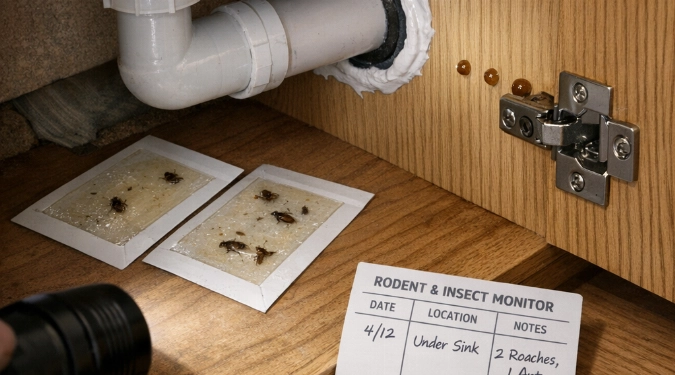
- Check under the sink. Inspect around plumbing penetrations.
- Open the stove’s lower drawer. Look along the back corners.
- Scan cabinet hinges and shelf-pin holes. German roaches love tight voids.
- Set 6 glue traps. Place two under the sink, two behind appliances, and two near trash.
Brands for monitors include Catchmaster, Victor, Trapper, Black Flag, Hot Shot, and EcoPest Labs. Date each trap with a marker.
Pick A Control Strategy That Matches The Problem
Most successful plans use three tools. You bait for the nest. You dust for cracks. You use spray only for edges and entry points.
Bait First For Hidden Colonies
Baits work because roaches feed, return to harborage, and spread it through contact and droppings. This is the closest thing to a Roach Control Trick that professionals rely on.
- Use gel baits like Advion, Maxforce, Combat, or Vendetta.
- Use pea-sized dots, not long lines.
- Place bait high and low. Think hinge corners, toe-kicks, and behind outlet covers.
- Do not spray repellent insecticide over bait. It can reduce feeding.
If you want a Fast Roach Solution, bait placement is the skill that matters most.
Add Dust Where Sprays Fail
Dusts stay active in voids for a long time when kept dry. Use a hand duster and apply a barely visible film.
- Boric acid powders can work, but they need correct placement.
- Silica gel dusts often perform better in dry voids.
- Apply inside wall voids, under appliances, and behind baseboards where safe and legal.
Keep dust out of open countertops and food areas. Follow label directions exactly.
Use Non-Repellent Spray For Edges
Reserve spray for baseboards, plumbing entry points, and exterior thresholds. Look for “non-repellent” on the label for indoor crack-and-crevice work.
- Target paths, not the middle of the room.
- Avoid broadcast spraying. It adds exposure without better control.
This approach is a Quick Pest Fix only if you also remove water sources.
Seal, Clean, And Deprive Water
Roaches can live a long time without food. They cannot last long without water. This step helps you Stop Roach Infestation cycles.
- Fix drips and wipe sinks dry at night.
- Store food in hard containers. Reduce cardboard in kitchens.
- Vacuum cracks and crevices before baiting. Remove egg cases and droppings.
- Seal gaps with silicone caulk. Add door sweeps if you see light under doors.
When To Call A Pro
Call a licensed pest professional if you have recurring German roaches, shared walls, or you cannot access key voids safely. Ask what bait rotation they use and how they measure progress. A good plan aims to Wipe Out Roaches by fixing conditions, not just applying chemicals.
Product Pitfalls That Waste Time
- Foggers: They rarely reach deep harborage. They can also spread roaches into new rooms.
- Strong-smell repellents: They can push roaches away from bait placements.
- One-tool plans: A single “Effective Roach Killer” claim is not a strategy.
FAQs
Why Do Roaches Show Up In Clean Homes?
Clean homes can still offer water and warmth. A single leaky valve or fridge drip pan can support activity even with spotless counters.
How Do I Keep Roaches Out After Control?
Keep two glue traps in place year-round. Replace them every 60 to 90 days. Treat any new trap spike as an early warning.
Is There An Easy Roach Remedy For Drains?
Scrub biofilm in sink overflows and floor drains. Use a drain brush and enzyme cleaner. Then fix moisture and cover unused drains.
Disclaimer: The information provided in this article is for educational and informational purposes only. It does not constitute professional advice. Readers should conduct their own research and consult with qualified professionals before making any decisions.