
These Photos Look Completely Normal Until You Notice One Small Detail
You’ve seen a photo that feels off, but you can’t explain why. Maybe it’s a “floating” person, a broken mirror reflection, or a giant object that makes no sense. Many of these are actually confusing photos or cleverly framed optical illusion images designed to trick your brain. If you’re tired of getting fooled by scroll-speed illusions and repost bait, this guide is for you. It helps you spot the hidden detail fast, too.
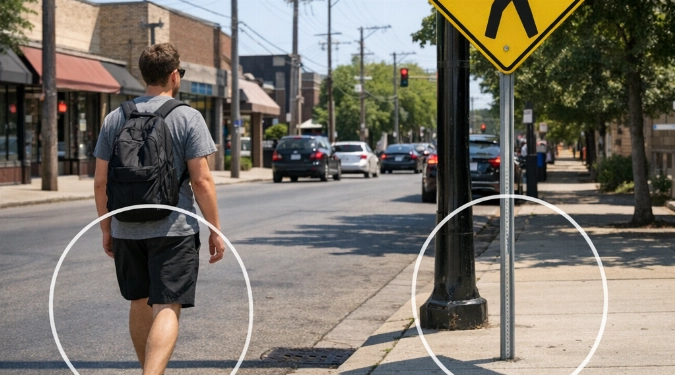
Learn to spot the tiny tells that turn a normal photo into a brain teaser. This guide shows fast checks for shadows, reflections, scale, and perspective. You’ll also get a simple routine for verifying what you see, plus tools to pause, zoom, and annotate before you share it—especially useful when dealing with strange viral photos that spread quickly online.
Start With A 10-Second Scan
- Trace the light. Find the brightest highlight. Then check if every shadow points the same way.
- Check edges. Look for halos, smeared pixels, or duplicated textures along hair, hands, and signs.
- Follow straight lines. Door frames, tiles, and horizons reveal lens tilt and forced perspective.
Small Details That Flip The Whole Scene
Shadows That Disagree
One sun should create one shadow direction. Two directions can mean multiple lights or compositing. Indoor photos can still betray this. Window light is softer than a flash shadow. Look under chins, chair legs, and curb edges.
Reflections With Missing Stuff
Mirrors and car paint act like truth serum. Check sunglasses, shop windows, and glossy floors. A missing phone, a warped hand, or a shifted horizon often explains the “how is that possible” feeling often seen in weird images online.
Scale That Breaks Physics
People misread size when there is no reference. Compare objects to known standards. Use a doorknob, a license plate, or a soda can as your anchor. A “giant dog” is often a close dog beside a far person.
Perspective Traps
Phones compress depth. A telephoto shot can glue foreground and background together. That is how “floating” people happen. Look for overlap points, like shoes crossing a curb line. Those points reveal the real distance.
Timing And Motion Glitches
Rolling shutter can bend propellers, golf clubs, and fan blades. Burst mode can freeze a splash midair in odd shapes. These artifacts create mind bending pictures without any edits.
How To Recreate The Effect On Purpose
Recreating the illusion teaches you how to detect it. Pick one technique and shoot it cleanly.
- Forced perspective: Place a small object close to the lens. Put a person far away. Align them with your screen grid.
- Reflection bait: Photograph a storefront. Move slightly left and right. Watch how the hidden subject appears or vanishes.
- Shadow test: Use one lamp. Take a second shot with phone flash. Compare shadow hardness and direction.
Tools That Help You Verify What You’re Seeing
- Built-in zoom and markup: Use your gallery app to zoom, then circle the detail before you comment.
- Google Lens: Great for finding earlier uploads of strange viral photos and identifying objects.
- TinEye: Useful for reverse image search when reposts are cropped or recolored.
- InVID: Helps when the “photo” is actually a video frame.
- FotoForensics: Error level analysis can hint at heavy recompression or local edits.
- ExifTool: Reads metadata when it still exists, like camera model and timestamps.
A Share-Safe Checklist
Run this before you repost confusing photos. It takes under a minute.
- Zoom to 200% on faces, hands, and text.
- Check one reflective surface and one shadow.
- Find a scale anchor and compare proportions.
- Reverse search once, even if you trust the account.
- Write what you verified, not what you assume.
Why Your Brain Misses The Detail
Your visual system prioritizes meaning over measurement. It locks onto faces, motion, and contrast first. Then it fills gaps with the most likely story. Optical illusion images exploit that shortcut. Weird images online also benefit from tiny screens and fast scrolling.
FAQs That Make You Better At Spotting Fakes
What Detail Is Most Reliable?
Text is a strong tell. Look for inconsistent letter spacing, mirrored characters, or warped baselines on signs and labels.
Can A Real Photo Still Look Impossible?
Yes. Lens choice, shutter timing, and viewpoint can create impossible-looking geometry. Many “levitation” shots are simple jumps plus precise framing.
How Do I Explain The Trick Without Sounding Annoying?
Point to one specific cue and show a crop. Avoid calling it “fake” first. Say what you noticed and why it changes the read.
Disclaimer: The information provided in this article is for educational and informational purposes only. It does not constitute professional advice. Readers should conduct their own research and consult with qualified professionals before making any decisions.