
The Future of Grocery Shopping: A Look at 2030
Imagine walking into a supermarket where the cart knows your dietary restrictions, the shelves restock themselves, and you leave without ever opening your wallet. This is not science fiction; it is the impending reality of 2030. Driven by rapid Digital Transformation in Grocery Stores, the shopping experience is shifting from a chore to a seamless, high-tech event. This guide explores exactly what you can expect in the next decade, from robotic assistants to hyper-personalized layouts.
The Rise of the Smart Entrance and Biometrics
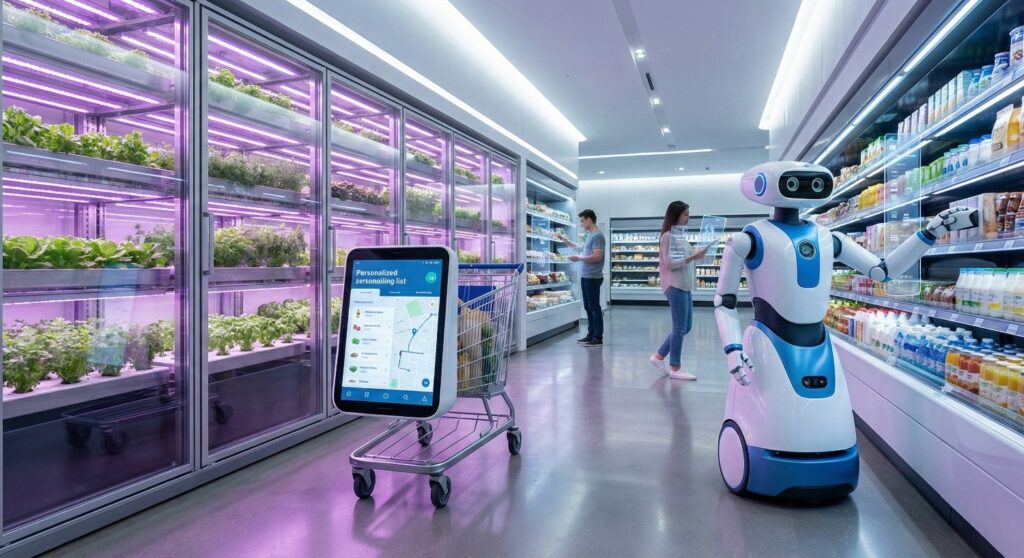
In 2030, the Grocery Store Setup begins before you even grab a basket. Entry gates will likely utilize biometric recognition—facial scanning or palm vein identification—linking you immediately to your loyalty account and payment method. This eliminates the need for physical loyalty cards or app scanning. As you enter, augmented reality (AR) glasses or smart cart screens will display a personalized shopping list, sorted by the store’s layout, highlighting items based on your past purchase history and current health goals.
Grocery Store Automation: Robots and Smart Shelves
The most visible change will be the heavy integration of Grocery Store Automation. You will no longer see employees manually checking inventory with clipboards. Instead, tall, slender robots (similar to current models like “Marty” or “Tally”) will roam the aisles continuously. These autonomous units use computer vision to detect spills, identify out-of-stock items, and verify pricing accuracy in real-time.
Furthermore, the shelves themselves are becoming intelligent. Electronic Shelf Labels (ESLs) will be industry-standard, allowing for dynamic pricing. This means a carton of milk approaching its expiration date could automatically lower its price by 30% to encourage a sale and reduce waste, communicating this deal directly to your smart device as you walk by.
A New Approach to Grocery Store Interior Design
The physical layout of the store will undergo a radical shift. Grocery Store Interior Design in 2030 will prioritize “fresh” and “experience” over rows of dry goods. Because center-store items like toilet paper, detergent, and canned soup can be easily automated, the sales floor will dedicate more square footage to:
- Vertical Farming Units: Glass-enclosed hydroponic gardens growing herbs and lettuces right in the produce aisle for maximum freshness.
- Grocerants: Expanded areas where chefs prepare meals using store ingredients, blurring the line between a supermarket and a restaurant.
- Butcher and Baker Stations: A return to service-oriented counters where human interaction is premium and focused on expertise rather than transaction processing.
The Evolution of Marketing Traps
While technology adds convenience, it also evolves the traditional Marketing Traps in Grocery Stores. In the past, stores placed milk in the back to force you to walk past impulse buys. In 2030, Digital Strategies for Grocery Stores will be far more subtle and psychological.
Smart carts and digital signage will use eye-tracking technology to see what you are looking at. If you linger on a premium brand of coffee but don’t pick it up, the screen might instantly offer a 10% digital coupon to nudge you toward the purchase. These “hyper-personalized” nudges are designed to increase basket size based on your specific behavioral data, making the marketing feel helpful rather than intrusive, though the end goal remains the same.
The “Dark Store” in the Back
A significant portion of the 2030 grocery store will be invisible to the shopper. To facilitate efficiency, many locations will adopt a hybrid model featuring a Micro-Fulfillment Center (MFC) in the back of the building. When you order commodity items (like paper towels or soda) via the store app, an automated system in the back picks and packs them. By the time you finish selecting your fresh produce and meat in the front of the store, your packaged goods are waiting for you at the exit, combining the speed of automation with the sensory experience of choosing fresh food.
Frequently Asked Questions
Will there be any cashiers in 2030? Likely very few. The standard will be “Just Walk Out” technology, where cameras and sensors track what you take and charge you automatically upon exit. Human employees will shift roles from scanning barcodes to customer service, sommelier-style advice, and managing the fresh food sections.
How will this affect food prices? Ideally, automation should stabilize or lower operational costs. By reducing shrinkage (theft and spoilage) through better inventory tracking and lowering labor costs for repetitive tasks, stores can theoretically pass savings on to consumers, though this depends on market competition.
Is my privacy at risk with biometric tracking? Privacy regulations will be a major topic. In the USA, data usage will likely be opt-in, meaning you can choose a “traditional” shopping experience without biometrics, though you may miss out on the personalized discounts and seamless checkout features that define the 2030 experience.
Conclusion
The grocery store of 2030 promises a landscape where friction is removed, and convenience is king. From the Grocery Store Interior Design that favors fresh experiences to the sophisticated Grocery Store Automation handling the drudgery of inventory, the future is efficient. However, as Digital Strategies for Grocery Stores become smarter, shoppers must remain aware of how their data shapes their experience. By understanding these upcoming changes, you can look forward to a shopping trip that saves you time, reduces waste, and caters specifically to your needs.