Storage Space Optimization Tips That Actually Work
Closets fill up fast, and “organizing” often just moves piles around. If you’re running out of room for clothes, shoes, or seasonal bins, you need choices that fit your space and habits. This article helps you stop rebuying containers and start using the space you already have.
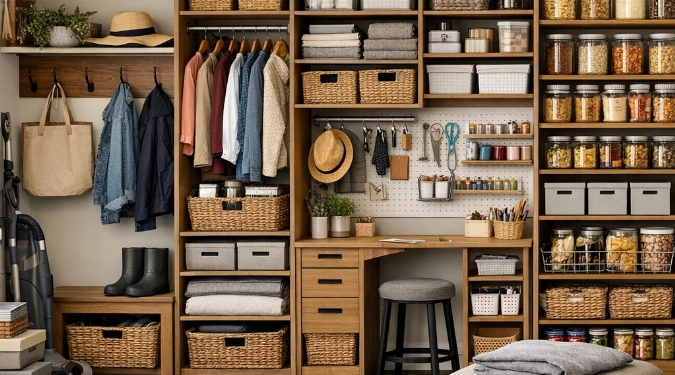
Learn to measure your space, map what you own, and pick the right storage tools. This guide shows what to keep, what to move out, and what to donate. You’ll get exact shelf heights, bin sizes, and layouts for closets, bedrooms, and small storage units.
Start With A 20-Minute Inventory Map
Don’t organize first. Measure first.
Use a tape measure and write three numbers for each zone: width, depth, height. Then list what must live there. Examples are “work clothes,” “holiday decor,” and “kids art.”
Next, tag each item with one letter: D for daily, W for weekly, S for seasonal, and R for rare. Daily items get eye-level space. Rare items get the top shelf or off-site.
Set one rule that prevents clutter relapse. Keep 10% of each shelf empty. That buffer stops piles from forming.
Use Vertical Space Without Wasting It
Most closets fail above the top shelf. Use the full height, but keep access realistic.
- Top zone: 14–18 inches tall for labeled lidded bins.
- Middle zone: 40–44 inches tall for hanging shirts and jackets.
- Bottom zone: two 10–12 inch shelves for shoes or folded denim.
For true Vertical Storage Solutions, anchor rails into studs. Use a stud finder. Keep heavy items below shoulder height.
Good systems include Elfa, ClosetMaid, Rubbermaid Configurations, IKEA BOAXEL, Easy Track, and The Container Store’s Avera. Mix baskets for grab-and-go items. Use clear bins only for categories you want to see.
Make Closets Work Like A Store
Closets feel bigger when every item has a named home. That is what closet organizers are for.
Use matching hangers. Velvet or slim plastic hangers save space. Keep one hook near the door for “worn but not dirty.”
For built-in closets, add one pull-out hamper and one pull-out shelf. These reduce floor clutter. Typical installed add-ons run about $150 to $400 per feature, plus labor.
If you want custom wardrobe cabinets, ask for adjustable shelves. Also ask for 32 mm drilling, which matches many hardware standards. Expect about $2,500 to $8,000 for a reach-in wall, depending on materials.
Build A Bedroom Wardrobe That Holds Real Life
A Bedroom Storage Wardrobe needs two zones. One zone is for “today.” One zone is for “later.”
Use the prime area for tomorrow’s outfit, gym kit, or work bag. Put a tray on a shelf for keys, wallet, and chargers. That ends the nightstand pile.
For drawers, use dividers that fit the drawer depth. A 3-inch divider works for socks. A 5-inch divider works for tees. File-fold to see every item at once.
If your wardrobe is freestanding, add anti-tip hardware. It is cheap. It prevents dangerous wobble.
Choose The Right Closet System For Your Home
Modular closet systems win when your needs change. Think renters, kids growing, or home offices.
Look for these specs before you buy:
- At least 14-inch shelf depth for folded clothes.
- Steel standards or thick composite for heavy loads.
- Accessory ecosystem, like drawers, baskets, and shoe racks.
Walk-in closet design works best with a clear aisle. Aim for 30–36 inches of walking space. Put hanging on the long walls. Put drawers on the short wall to avoid tight corners.
Know When A 5×5 Unit Is The Smarter Move
Sometimes the best organizer is less stuff at home. A small unit is ideal for seasonal overflow.
Search “5×5 Storage Units Near Me” when you need space for bins, a small dresser, or sports gear. A 5×5 unit fits roughly 6–8 medium moving boxes. It also fits a set of golf clubs and a folding chair stack.
Pack with a one-touch rule. Every box gets a label on two sides. Put a simple aisle down the center. Store soft items in vacuum bags inside bins to prevent tears.
Typical monthly pricing lands around $40 to $120, depending on access and climate control. Ask if locks are included. Ask about admin fees before you sign.
Wardrobe Storage That Stays Organized
Wardrobe storage solutions fail when they require perfect habits. Build for lazy days.
- Keep a donation bag on a hook.
- Use one “misc” bin per room, not five.
- Schedule a 10-minute reset every Sunday.
Buy fewer containers than you think. Let the space limit be the rule. If it does not fit, something leaves.
References
- The Container Store
- IKEA
- ClosetMaid
- Rubbermaid
- Easy Track
- Elfa
Disclaimer: The information provided in this article is for educational and informational purposes only. It does not constitute professional advice. Readers should conduct their own research and consult with qualified professionals before making any decisions.