
Simple Foods That May Help Support Brain Health in Seniors
Grocery choices get harder with age. Appetite changes, chewing issues, and meds can affect taste and energy. Many older adults want clearer thinking, but hate complicated diets. This article is for caregivers and seniors who want simple, realistic food options that fit normal meals.
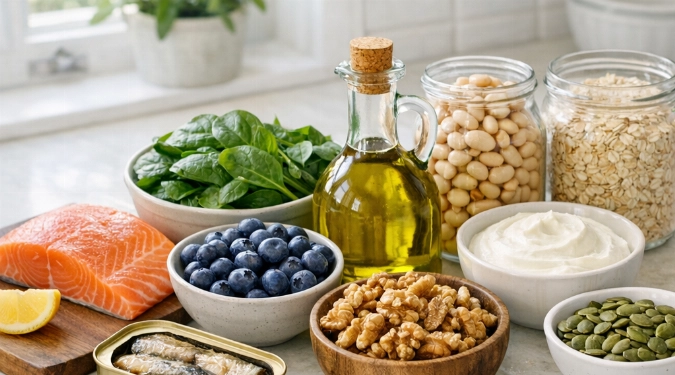
Three foods are easy to add, but easy is not enough. This guide gives a tight brain-friendly grocery list, simple serving ideas, and smart swaps for common meals. You will also learn what to check on labels, and how to pair foods to support steadier energy and focus.
The 10 Foods Worth Buying Often
These picks are practical, widely available, and easy to chew. Each one has a simple “why” and a simple “how.”
1) Salmon And Sardines
Fatty fish provides DHA and EPA omega-3 fats. These support brain cell structure. Try canned sardines in olive oil on toast. Try salmon with a bagged salad.
2) Eggs
Eggs provide choline, which supports acetylcholine signaling. Many people find eggs easy to prepare. Try hard-boiled eggs for snacks. Add eggs to a veggie scramble.
3) Blueberries
Blueberries contain anthocyanins and other polyphenols. These support vascular health and antioxidant defenses. Use frozen berries in oatmeal. Add them to plain yogurt.
4) Leafy Greens
Spinach, kale, and romaine provide folate, vitamin K, and lutein. These nutrients are linked with cognitive aging in studies. Add greens to soups. Use pre-washed greens for speed.
5) Walnuts
Walnuts provide ALA omega-3 fats and polyphenols. They are an easy swap for cookies. Keep a small bowl ready. Chop them into oatmeal or salads.
6) Extra-Virgin Olive Oil
Olive oil is rich in monounsaturated fat and polyphenols. It is a simple fat upgrade. Use it for salad dressing. Drizzle it on beans or vegetables.
7) Beans And Lentils
Legumes bring fiber, magnesium, and steady carbs. They support gut bacteria, which can affect inflammation. Use canned no-salt-added beans. Rinse them to cut sodium.
8) Plain Yogurt Or Kefir
Fermented dairy adds protein and probiotics. It can be easier than cooking breakfast. Choose unsweetened, then add fruit. Use kefir in a smoothie.
9) Oats
Oats provide beta-glucan fiber for heart health. Heart support also supports brain blood flow. Use quick oats for convenience. Add cinnamon and nuts for flavor.
10) Pumpkin Seeds
Pumpkin seeds provide magnesium, zinc, and iron. These minerals support energy metabolism. Sprinkle them on salads. Blend them into pesto with olive oil.
How To Build A “Two-Minute” Brain Plate
Use a simple formula at each meal. Pick one protein, one high-fiber carb, and one colorful plant. Add an unsaturated fat. Examples that take little effort. Greek yogurt, blueberries, and walnuts. Lentil soup with spinach and olive oil. Sardines on whole-grain crackers with a side salad.
Label Checks That Matter Most
Use the Nutrition Facts panel like a filter. Compare added sugars across brands. Keep sodium in check for blood vessel health. Check ingredient lists for hidden sweeteners. Watch for “corn syrup,” “cane sugar,” and “maltodextrin.” Choose “no salt added” beans when possible.
When Food Support Is Not Enough
New confusion, frequent falls, or sudden personality change needs medical attention. Ask a clinician to review meds and labs. Bring a short food log to the visit. If you want coaching, look for a registered dietitian. For behavior and mood support, some people search nutritional psychologist near me. Verify licensure and scope before booking.
FAQ
What Is The Best Brain Food?
There is no single winner for everyone. Many researchers favor a pattern like Mediterranean-style eating. If you must pick one, fatty fish is a strong anchor.
Foods That Improve Memory Mayo Clinic: Is There A List?
Major medical centers often point to fish, berries, leafy greens, and nuts. Use those as “default groceries.” Then reduce ultra-processed snacks over time.
Are Neuro Nutrition Courses Worth It?
They can be useful for professionals or serious learners. Check who teaches the course and if it cites peer-reviewed research. Avoid programs that promise cures.
How To Keep Your Brain And Body Healthy?
Pair food changes with movement and sleep habits. Even short walks support blood flow. Keep strength training in the week. Use consistent bed and wake times.
Disclaimer: The information provided in this article is for educational and informational purposes only. It does not constitute professional advice. Readers should conduct their own research and consult with qualified professionals before making any decisions.