Plastic Septic Tanks: Benefits, Installation, and Maintenance
Choosing a septic tank feels simple until you hit permits, soil limits, and wildly different bids. Plastic tanks add their own questions about strength, flotation, and longevity. If you’re planning a new system or replacing a failing one, this guide helps you sort options and avoid expensive mistakes.
You’ll learn how plastic septic tanks work, which specs matter, and what to ask your installer. This guide gives clear cost ranges, a step-by-step install overview, and a maintenance schedule. You’ll also get brand examples, lot-fit tips, and warning signs that call for service before failures happen.
What Makes Plastic Tanks Different
Plastic septic tanks are usually rotationally molded polyethylene. Some are injection molded. They are light enough to move with small equipment. They resist rust and many soil chemicals.
Plastic tanks still need correct bedding and backfill. They can deform if set on uneven soil. They can float if groundwater rises. A proper anti-float plan matters as much as tank size.
When Plastic Is The Best Choice
Plastic works well when access is tight. It helps when you cannot bring in a large crane truck. It also fits projects where corrosion is a concern.
Plastic can be a smart pick for septic systems for small lots. The tank can pair with compact treatment options. Examples include an aerobic treatment unit or a media filter. Your designer chooses what the site can permit.
Specs To Compare Before You Shop
Capacity And Approval Marks
Common residential sizes are 1,000 and 1,500 gallons. Your permit will state the minimum. Look for NSF and IAPMO listings where required.
Ask for the tank’s maximum burial depth rating. Confirm traffic ratings if it is near a driveway. Many tanks need a separate traffic riser kit.
Inlet, Outlet, And Filter Details
Check inlet and outlet height from the tank bottom. That affects pipe slope. Ask if an effluent filter is included. Filters reduce solids reaching the field.
Verify riser compatibility and lid load ratings. Child-resistant lids are worth it. Many codes require secure lids.
Six Plastic Tank Brands People Actually Install
Availability varies by dealer and code approval. These names are common in contractor supply channels.
- Norwesco
- Snyder Industries
- Roth MultiTank
- Infiltrator Water Technologies (IM series)
- Jamestown Plastics
- Rissler Plastics
Installation Steps That Prevent Callbacks
Base Prep And Bedding
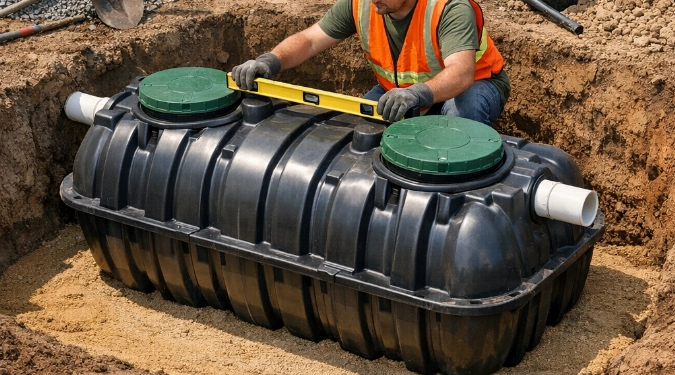
Installers usually excavate to undisturbed soil. They add a level base of sand or fine gravel. They compact in lifts to prevent settling.
Never set a plastic tank on large angular rock. Point loads can stress the shell. Ask what bedding spec your installer follows.
Set, Plumb, And Connect
The tank must sit level to keep scum and sludge zones stable. Inlet and outlet pipes need correct slope. Use approved couplings and sealants for watertight joints.
Risers should be set plumb and sealed. Bring lids to grade to avoid digging later. Add an inspection port if your design allows it.
Backfill And Anti-Float Plan
Backfill with specified material and even lift heights. Some sites need a concrete deadman or straps. Some need a partial water fill during backfill.
Ask how the installer addresses buoyancy. High groundwater is where many failures start.
Realistic Cost Ranges And What Moves Them
Installed septic tank price depends on soil, access, and permitting. For a plastic tank only, plastic septic tank cost commonly runs $900 to $2,600 for the tank. Labor and materials add much more.
For a full system, new septic system cost often lands between $9,500 and $22,000. Mound or pressure-dosed fields can push $25,000 to $40,000.
If you need the cost to install septic tank and leach field, many homeowners see $12,000 to $28,000. Tight access, rock, and long pipe runs raise it.
For replacement, the cost to replace septic tank and drainfield often runs $15,000 to $35,000. It climbs if the old field is in a hard-to-reach area.
If you are comparing septic tank prices, ask for an itemized septic tank price list. It should separate tank, risers, filter, excavation, and disposal. A separate septic tank cleaning price list helps you budget pumping.
If you are browsing plastic septic tanks for sale or poly septic tanks for sale, confirm the model is approved for your jurisdiction. Confirm delivery fees and lead times.
Maintenance That Extends Field Life
Pump on a schedule based on tank size and household load. Many homes land at every $300 to $650 per visit. Heavy use may need more frequent pumping.
Replace or clean effluent filters on schedule. Some need rinsing every 6 to 12 months. Keep records of service dates and measured sludge depth.
Keep surface water away from the tank area. Fix leaking fixtures fast. Avoid driving over the tank and field.
Warning Signs You Should Not Ignore
Slow drains and gurgling can mean a clogged filter or a full tank. Sewage odors near risers can signal a bad seal. Wet spots over the field can mean hydraulic overload.
If alarms sound on a pump tank, treat it as urgent. Shut off high water use until it is checked. Do not open lids without proper safety steps.
References
- EPA: Septic Systems Overview and Homeowner Guidance
- NSF International: Onsite Wastewater Treatment Standards
- IAPMO: Product Listing and Certification Programs
Disclaimer: The information provided in this article is for educational and informational purposes only. It does not constitute professional advice. Readers should conduct their own research and consult with qualified professionals before making any decisions.