
Orthopedic Shoe Guide: Choose the Right Fit for Your Feet
This guide explains how to choose the right orthopedic shoes for your feet by identifying key features, foot shapes, and fit strategies. You’ll learn how Supportive Orthopedic Shoes and Ergonomic Shoe Designs improve comfort, alignment, and mobility for daily wear.
Why Orthopedic Shoes Matter
Orthopedic shoes matter because the right design can correct alignment, reduce strain, and improve long-term mobility. Since the title promises help in choosing the right fit, this section explains why selecting the correct pair is essential—not optional—when seeking Comfortable Walking Shoes and Shoes for Daily Foot Support. How Orthopedic Shoes Improve Foot Health:
- They redistribute pressure to reduce heel and forefoot stress.
- They support natural foot alignment, which prevents knee, hip, and back pain.
- They stabilize the arch to improve balance and reduce fatigue.
Typical Problems Orthopedic Shoes Help Resolve: Plantar fasciitis, Flat feet and overpronation,Bunions and hammertoes, Arthritis-related pain, Neuropathy requiring deeper toe boxes
Understanding Your Foot Shape
To choose the correct orthopedic shoe, you must first understand your foot structure. Foot shape determines which Foot Alignment Footwear will feel supportive versus restrictive.Key Foot Shapes and Their Shoe Requirements:
- Flat Feet: Need firmer arch support and motion control to prevent overpronation.
- High Arches: Need cushioned midsoles and curved lasts to absorb shock.
- Wide Feet: Require wide-width options and spacious toe boxes to prevent compression.
- Narrow Feet: Need snug heel counters and adjustable lacing for stability.
How to Identify Your Foot Shape at Home
- Wet-footprint test to see arch height
- Measure width at the widest point
- Examine wear patterns—inner wear indicates pronation; outer wear suggests supination
Key Features of Orthopedic Shoes
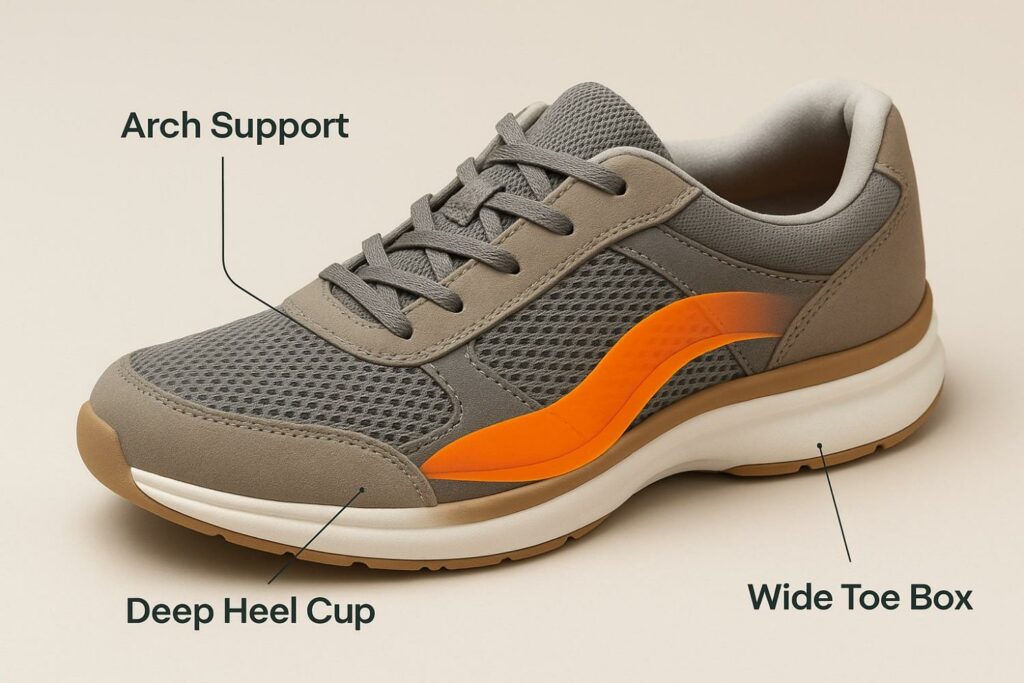
Once your foot shape is understood, choosing the right orthopedic shoe becomes significantly easier. This section outlines the features that define high-quality Supportive Orthopedic Shoes and how each feature contributes to comfort, alignment, and mobility.Essential Features to Look For:
- Structured Arch Support: Prevents the foot from collapsing inward and maintains joint alignment.
- Deep Heel Cup: Stabilizes the heel for a more efficient walking motion.
- Wide Toe Box: Reduces pressure on toes and allows natural toe spread.
- Shock-Absorbing Midsoles: Reduce impact for everyday walking.
- Removable Insoles: Allow customization with medical orthotics.
- Flexible Yet Supportive Outsoles: Balance stability with natural foot movement.
Matching Shoes to Your Needs
- For Daily Walking: Choose Comfortable Walking Shoes with rocker soles to ease forward motion.
- For Alignment Issues: Select Foot Alignment Footwear with motion-control features and medial posts.
- For Balance or Mobility Concerns: Look for Mobility-Enhancing Footwear with wide soles and slip-resistant treads.
- For Work Environments: Ergonomic shoes with reinforced midsoles and arch cradling for long periods of standing.
- For Diabetic or Sensitive Feet: Soft interiors, seamless linings, and extra-depth shoes to prevent rubbing.
Brands Commonly Recommended in the USA
- New Balance: Wide sizing and strong arch foundations.
- Hoka: Highly cushioned midsoles for shock absorption.
- Brooks: Motion-control models for flat feet.
- Orthofeet: Medical-grade ergonomic designs for chronic foot pain.
How to Try On Orthopedic Shoes
- Try shoes at the end of the day when feet are largest.
- Wear your usual socks or orthotics.
- Ensure one thumb’s width between your longest toe and the front of the shoe.
- Check that the heel does not slip when walking.
- Walk on different surfaces—carpet and hard floors—to test support.
Signs the Shoe Is Not the Right Fit
- Toe pinching or rubbing
- Arch support sitting too far forward or back
- Heel lifting inside the shoe
- Foot rolling inward or outward excessively
Caring for Your Orthopedic Shoes: Rotate pairs to extend cushioning lifespan. Replace insoles every 6–12 months depending on wear. Air-dry shoes and avoid direct heat to protect midsoles. Clean outsoles regularly to maintain traction and stability.
Conclusion: This guide delivered exactly what the title promised—showing you how to choose the right orthopedic shoe fit by understanding foot shape, key shoe features, and how to match designs to your comfort and mobility needs. With this knowledge, you can confidently select Supportive Orthopedic Shoes that enhance alignment, reduce pain, and improve your daily movement.