
One Daily Drink That May Help Support Leg Circulation
A warm, unsweetened beetroot drink is one daily option that may help support leg circulation, particularly for older adults who notice heavy, tired legs after sitting. Beets contain dietary nitrates that the body can convert into nitric oxide, which may help blood vessels relax and widen to support blood flow. This article explains what a realistic “24-hour” effect can look like, how to make one cup in a simple way, what sensations are normal (like beeturia), and when to be cautious based on medications or health history.
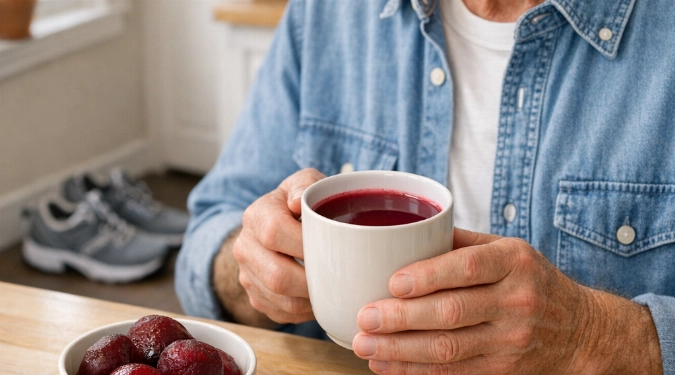
If your legs feel heavy, tired, or slow to “wake up” after sitting, one simple daily drink is worth knowing about: a warm cup of unsweetened beetroot drink (beet juice mixed with water or a simple beetroot powder drink). It’s an easy habit that may help support circulation to the lower body, especially for older adults.
Why Beetroot Is The One Daily Drink To Focus On
Beets naturally contain dietary nitrates, which the body can convert into nitric oxide. Nitric oxide helps blood vessels relax and widen, which may support blood flow. That “wider pipe” effect is one reason many people look to beets when they want to Boost Circulation without relying on stimulants.
This isn’t positioned as a cure or a medical treatment. It’s a practical, food-based Leg Health Drink idea that fits into everyday routines, and it can be paired with smart movement and hydration for better Circulation Support.
What “In 24 Hours” Can Realistically Mean
Some people notice a difference in how their legs feel within a day, such as less “dead leg” sensation after sitting, or feeling a bit more springy on a walk. That’s the kind of “24-Hour Boost” many headlines hint at: short-term support that may show up as comfort or easier movement, not a dramatic transformation.
For Seniors’ Circulation goals, it helps to keep expectations grounded: improvements can be subtle, and consistency matters. If swelling, pain, skin color changes, or one-sided symptoms occur, it’s important to discuss them with a clinician.
How To Make The Drink
Option 1: Simple Beet Juice And Water
Use a small serving of unsweetened beet juice and dilute it with water. Many people prefer this because straight beet juice can be intense in flavor. This can be a gentle Drink for Seniors choice when sipped slowly with breakfast.
Option 2: Beetroot Powder In Warm Water
Beetroot powder stirred into warm water makes a “tea-like” drink without added sugar. Choose an unsweetened product with minimal ingredients. This approach is convenient and can help you stick with a daily routine to Revitalize Legs over time.
When To Drink It For Best Leg-Focused Support
Timing is flexible, but many people do well with one cup in the morning or early afternoon. If your goal is to Energize Your Legs for walking, errands, or a workout class, taking it a couple of hours before activity may be a practical experiment.
Avoid taking it too late in the day if it makes you feel more alert or if it increases bathroom trips at night. The best timing is the one you can repeat daily as part of Healthy Aging.
What You Might Feel And What’s Normal
Two common, harmless surprises are pink or red urine and stools (beeturia) and a temporary change in body odor. Those can look alarming if you’re not expecting them, but they are often normal after beets.
What some people describe as Instant Leg Relief is often a combination of hydration, a warmer drink, and the way beets may support blood-vessel function. If you take blood pressure medications, nitrate-based heart medications, or have kidney stone concerns, it’s wise to ask a qualified professional whether a beet drink fits your situation.
Small Add-Ons That Keep The Drink “One Drink”
The focus stays on the beetroot drink itself, but simple additions can make it easier to tolerate without turning it into a different recipe. A squeeze of lemon or a slice of ginger can improve taste. If you use a blender, a few ice cubes can mellow the earthy flavor.
Quick Comparison: Beetroot Drink Vs Other Popular Choices
| Drink | Why People Use It | Leg-Circulation Consideration |
|---|---|---|
| Unsweetened Beetroot Drink | Dietary nitrates that may support nitric oxide | Often chosen specifically to support lower-body blood flow |
| Coffee | Alertness and perceived energy | Can feel energizing, but doesn’t directly target vessel widening |
| Green Tea | Polyphenols and mild caffeine | May support overall cardiovascular health, effects may be subtle |
| Plain Water | Hydration supports blood volume and comfort | Helpful baseline; pairing with beets can be a practical step up |
FAQs
How Much Should I Drink Each Day?
A common approach is one cup daily, which matches the “one cup” routine many older adults find manageable. Start smaller if you’re sensitive to new foods, and keep it unsweetened to avoid extra sugar.
Is This Safe If I Have High Blood Pressure?
Beets may lower blood pressure in some people, which can be a benefit, but it also means you should be cautious if you already take blood-pressure-lowering medication. Monitoring how you feel and discussing it with a clinician is a safe, educational next step.
How Soon Will I Notice Anything?
Some people notice changes the same day, while others only feel a difference after a couple of weeks of consistency. That’s why a “one cup daily” routine can be more useful than an occasional drink.
What Else Helps Leg Circulation Alongside The Drink?
Short walking breaks, calf raises at the kitchen counter, and ankle circles after sitting can all support comfort. These movement habits don’t replace the drink, but they pair well with it for daily leg support.
Conclusion
If you want one simple daily drink to center your routine around, an unsweetened beetroot drink is a practical option that may help support leg circulation. One cup a day, kept consistent, can complement regular movement and hydration as part of a steady plan for better lower-body comfort.
Disclaimer: The information provided in this article is for educational and informational purposes only. It does not constitute professional advice. Readers should conduct their own research and consult with qualified professionals before making any decisions.