
Musical Instruments Guide: Types, Learning Paths, and Key Considerations
Picking a first instrument is easier when you separate the choice into three parts: the instrument family that fits your body and interests, a learning path you can stick with, and the practical setup that makes practice doable at home. This guide explains the main types of musical instruments, beginner-friendly starting points by goal, common learning options (lessons, apps, and hybrid plans), and the key considerations that affect progress, including noise, portability, maintenance, and support. You’ll also get a simple practice structure and FAQs to help you decide whether to rent or buy, how soon songs usually happen, and whether reading music is necessary.
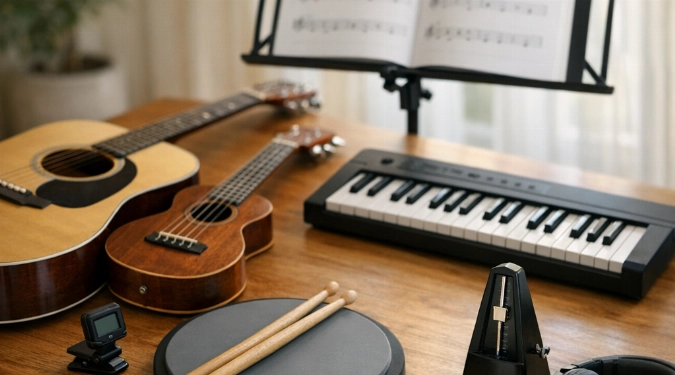
Choosing an instrument is exciting, but it can also feel oddly high-stakes: you want something you’ll actually practice, that fits your music taste, and that doesn’t create avoidable frustration. This guide breaks down common instrument types, practical learning paths, and the key considerations that help beginners stick with it.
Core Types Of Musical Instruments And What They Feel Like To Learn
Most instruments fall into a few families, and each one rewards practice differently. Matching the “feel” of learning to your personality is often the fastest way to learn more about musical instruments and learning options without wasting months on a mismatch.
Strings
Guitar, bass, violin, and ukulele build finger strength and coordination. Guitar and ukulele offer quick early wins with chords, while violin rewards patience with tone control and intonation.
Keyboards
Piano and digital keyboards are visual and logical, which makes them strong Instruments For Learning Music Basics. You can see harmony laid out left-to-right, and practice can be quiet with headphones on many digital models.
Percussion
Drum kit, snare, cajón, and hand percussion focus on timing and groove. Percussion can be beginner-friendly because you can play musically with fewer notes, but consistent tempo work matters.
Woodwinds And Brass
Flute, clarinet, saxophone, trumpet, and trombone require breath control and embouchure. They may take longer to produce a stable tone, but they build strong musical phrasing and ear skills.
Musical Instruments For Beginners: Strong First Choices By Goal
“Best” depends on your goal: playing songs fast, joining school band, producing beats, or performing singer-songwriter material. Here are grounded starting points that tend to work well.
- Quick songs and singalong playing: ukulele or acoustic guitar
- Clear music theory foundation: digital piano/keyboard
- Beat-making and rhythm: practice pad + sticks, cajón, or entry e-drum kit
- School ensembles: clarinet, trumpet, trombone, or alto saxophone
- Low physical strain options: keyboard or ukulele (often lighter hand demands than barre-chord guitar early on)
If you’re comparing Musical Instruments For Beginners, prioritize comfort, sound you love, and a path to practice at home without friction.
Learning Paths: Lessons, Self-Study, And Hybrid Plans
Learning options generally fall into three routes, and many players mix them over time.
Private Lessons
A weekly teacher can prevent technique problems (like tense wrists on piano or collapsed hand position on guitar). Consider asking how they structure the first month: posture, warmups, reading, ear training, and a simple song plan.
Apps And Online Courses
Platforms like Yousician (guitar/piano/uke), Simply Piano (piano), and Fender Play (guitar) can support consistency with guided practice and feedback. They work best when you also record yourself and check timing with a metronome.
Hybrid: The Most Common Sustainable Option
Many beginners do short lesson blocks (for setup and technique), then use self-study for repertoire. A practical cadence is one lesson every two weeks while you build a routine.
Music Equipment And Instrument Options That Matter Early
Beginner progress often depends on setup more than talent. A few smart additions reduce friction and make practice more pleasant.
- Metronome or metronome app: steady timing for any instrument
- Clip-on tuner: essential for guitar/ukulele/violin; many use brands like Snark
- Headphones: helpful for digital piano and electronic drums
- Music stand: keeps posture and reading consistent
- Maintenance basics: valve oil for trumpet, cork grease for clarinet, extra strings for guitar
When comparing Music Equipment And Instrument Options, focus on reliability and comfort rather than chasing pro features you won’t use yet.
Choosing Instruments For Different Music Styles
Your preferred style should steer your choice because it determines what you’ll actually practice.
- Pop/rock: electric guitar + small practice amp, bass, drum kit, or keys
- Classical: piano, violin, cello, flute, clarinet
- Jazz: saxophone, trumpet, piano, upright/electric bass
- Country/folk: acoustic guitar, banjo, mandolin, fiddle
- Electronic/hip-hop production: MIDI keyboard + DAW (for example, GarageBand or Ableton Live Intro)
Thinking in terms of Instruments For Different Music Styles helps you avoid buying something that doesn’t match your listening habits.
Musical Tools For Practice Sessions: A Simple Routine That Builds Momentum
A repeatable structure reduces decision fatigue. These Musical Tools For Practice Sessions work across instruments and keep practice measurable.
- 5 minutes: warmup (scales, open chords, rudiments, long tones)
- 10 minutes: timing work with metronome (start slow, increase in small steps)
- 10 minutes: a “problem spot” drill (one riff, measure, or transition)
- 5 minutes: play something enjoyable to finish
Recording a 30-second clip once a week can reveal improvements you won’t notice day-to-day.
Key Considerations Before You Commit
Before you choose, check four realities: noise level (neighbors, roommates), portability (school, gigs), physical fit (hand size, breath capacity, comfort), and support (available teachers, band programs, repair shops). Also consider whether renting first makes sense for band instruments; it can simplify maintenance and upgrades while you learn.
Frequently Asked Questions
Should I Rent Or Buy My First Instrument?
Renting is common for band instruments like clarinet, trumpet, and trombone because it spreads costs and often includes service coverage. Buying can make sense for guitars, ukuleles, and digital keyboards if you’ve tested models and expect to practice consistently.
How Long Until I Can Play Real Songs?
Many beginners can play simplified songs in a few weeks on ukulele, basic keyboard, or guitar power chords. Cleaner tone, smoother transitions, and steady rhythm typically take months of consistent practice, especially on violin and wind instruments.
Do I Need To Read Music?
It depends on your goals. Reading helps with classical and ensemble settings, while chord charts and tabs are common for guitar-based styles. Ear training and rhythm counting support any path, even if you don’t read fluently yet.
What If My Instrument Sounds Bad At First?
That’s typical. Many “bad” early sounds come from setup and technique: old strings, an untuned instrument, a leaky woodwind pad, or tense posture. A quick check by a teacher or repair tech can remove obstacles early.
Conclusion
A smart start comes from matching an instrument type to your goals, choosing a learning path you’ll sustain, and setting up a few essentials that make practice easier. If you use your preferred style as the compass and build a simple routine, you can steadily grow skills and confidence while exploring musical instruments and learning options.
Disclaimer: The information provided in this article is for educational and informational purposes only. It does not constitute professional advice. Readers should conduct their own research and consult with qualified professionals before making any decisions.