Modern Wall Panels or Traditional Tiles? A Bathroom Guide
Your shower walls are due for a refresh, but the choice feels messy. Tiles look classic, yet grout can be a pain. Panels look clean, yet you may worry about seams, durability, and resale. This guide helps homeowners and remodelers pick the best finish for their budget, timeline, and tolerance for upkeep.
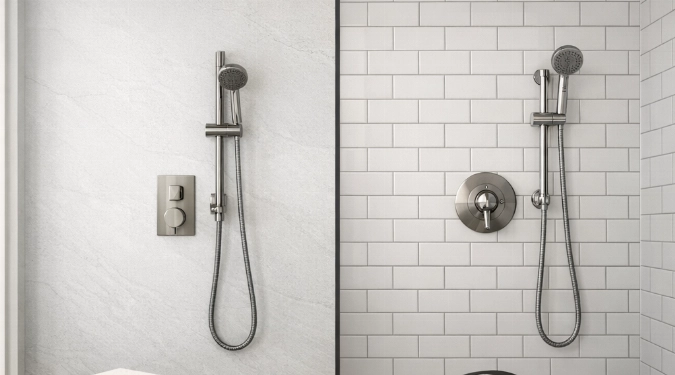
Pick the right shower surface in under ten minutes. This guide gives a side-by-side checklist for cost, install time, cleaning, and repair. You’ll also get a materials cheat sheet, a brand shortlist, and what to ask an installer before you commit to either option. Fast.
The Quick Decision Checklist
- Choose panels if you want fewer grout lines, faster installs, and easy wipe-down cleaning.
- Choose tile if you want custom layouts, niche detailing, and proven long-life repairability.
- Don’t choose either yet if your framing is out of plumb or your waterproofing plan is unclear.
Materials That Actually Show Up On Quotes
Panel Materials
- HPL compact laminate (often called “laminate panels”). It is stiff, impact resistant, and seam-driven.
- PVC composite. It is budget friendly, but it can look plasticky in bright light.
- Acrylic. It looks glossy and clean, but it can scratch if you use abrasive pads.
- Solid surface. It feels premium and can be refinished, but it costs more and weighs more.
- FRP. It is tough and common in utility spaces, but design options are limited.
Tile Materials
- Porcelain. It is dense and water resistant, so it is a common shower default.
- Ceramic. It is cheaper, but chips can expose a softer body underneath.
- Natural stone. It looks great, but it needs sealing and careful cleaner choices.
Waterproofing: Where Wins And Failures Happen
Tile is not waterproof. Grout is not waterproof. The waterproof layer sits behind the tile. For tile, ask which system they use. Common choices are Schluter Kerdi, Wedi board, and Liquid membranes like RedGard. Many waterproof wall panels for showers rely on sealed seams and a waterproof backer. Ask what makes the assembly waterproof, not just the face. Get the seam plan in writing. Confirm inside corners, valve cutouts, and niche edges.
Real-World Costs You Can Budget
Installed tile showers often land between $25 and $60 per square foot for labor and setting materials. Premium tile and complex layouts push higher. Installed panel systems often land between $18 and $45 per square foot, depending on material and seam count. Solid surface and large slabs can exceed that. Accessories move totals fast. Add costs for niches, shelves, trim profiles, and upgraded valves.
Installation Time And Disruption
Panels usually install in one to two days once prep is done. Tile often needs several visits for setting, curing, grouting, and sealing. Ask how they handle substrate flattening. Panels telegraph waves, and tile shows lippage on uneven walls. For wall shower panels, ask where seams will land. Seams should avoid direct spray zones when possible.
Cleaning And Long-Term Upkeep
Panels win on daily cleaning. Use a non-abrasive bathroom cleaner and a soft cloth. Tile wins on spot repair. You can replace a cracked tile without changing the whole wall, if you have spares. Grout care is the tile tax. Choose epoxy grout for less staining, but expect higher labor costs.
Six Brands Installers Actually Know
- Fibo
- Wetwall
- Dumawall
- Wilsonart
- Formica
- Swanstone
Picking For Your Layout
Small showers benefit from fewer seams. Large-format panels can make tight spaces feel bigger. For curbless entries, focus on floor waterproofing and slope first. Wall finish choice comes second. If you want shower panels instead of tiles, plan one accent wall with tile elsewhere. It can save time while keeping character.
FAQs That Save Rework
- Can panels go over existing tile? Sometimes. You still need flat, solid walls and clean bonding surfaces. Many pros prefer removal to inspect moisture damage.
- What sealant should be used at seams? Follow the manufacturer system. Mixing adhesives and sealants is a common failure point.
- Do panels work outside the shower? Yes. Use panels for bathrooms on vanity walls or toilet zones for easy cleaning and splash protection.
- What should I keep for future repairs? Save one extra panel offcut, trim pieces, and the color code. Do the same with tile and grout.
Disclaimer: The information provided in this article is for educational and informational purposes only. It does not constitute professional advice. Readers should conduct their own research and consult with qualified professionals before making any decisions.