
Modern Alternatives to Hiding House Keys for Improved Security
Hiding a spare key can feel convenient, until someone else finds it first. If you share access with family, guests, or service pros, you need a safer plan that still works on a busy day. This article lays out modern options that reduce risk without turning your home into a tech project.
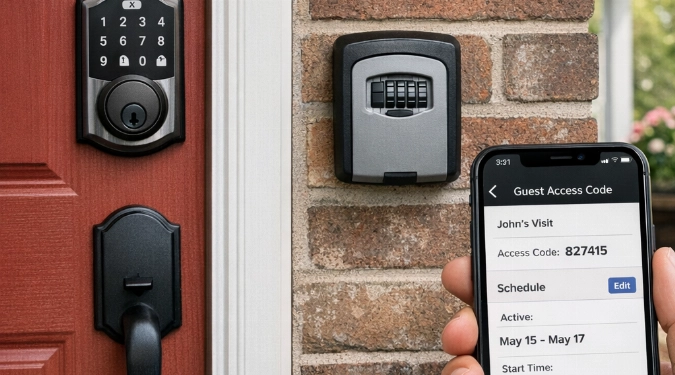
Pick a no-spare-key setup that fits how you live. This guide compares smart locks, keypad deadbolts, and key vaults with real costs. You will also get a simple checklist for installation and access sharing. You will leave knowing which option blocks common break-in tricks.
Why “Under The Mat” Fails In Real Life
Burglars check the same “clever” spots. Planters, porch lights, and fake rocks are first on the list. Many break-ins are quiet. Someone finds the key, tests it, and comes back later. Your goal is to remove the reward of searching.
Option 1: Keypads And App Control
Keyless Entry Systems replace physical copies with codes and schedules. You can give a dog walker a code that works only on weekdays. You can delete it in seconds. That is faster than chasing down spare keys.
Most keypad deadbolts run about $80 to $300. Add $0 to $20 per month if you want remote features on some models. Pro install often ranges from $120 to $250 per door. DIY is common if the door is standard.
Option 2: Smart Locks That Still Have A Keyway
Smart Locks are useful when you want automation without giving up a backup key. Look for auto-lock timing, tamper alerts, and a strong deadbolt throw. Consider battery type and emergency power options. Many models can be opened with a phone, code, or key. Models People Actually Buy are Schlage Encode and Encode Plus, Yale Assure Lock 2, Kwikset Halo Touch etc.
Match the lock to your door. Some replace the full deadbolt. Others convert the interior thumb turn only. A conversion model keeps your outside hardware the same.
Option 3: Fingerprints For Fast Access
Biometric Door Locks shine when you want quick entry with hands full. They also avoid code sharing, since a fingerprint is not easy to text. Use them with a PIN fallback. That matters for wet fingers and winter gloves. Expect about $150 to $400 for a solid fingerprint model. Pay attention to weather rating if it is exposed to rain.
Option 4: Lockboxes Done The Right Way
Sometimes you still need a physical key outside. Do it with Secure Key Storage Solutions, not “creative hiding.” A real lockbox is anchored and built to resist prying. It also keeps the key out of sight. Products Worth Comparing are Master Lock 5400D and 5441EC, Kidde AccessPoint, Supra KeyAdvantage (agent-focused) etc.
A Hidden Safe For Keys works best when it is bolted inside a garage or a shed. Avoid anything that looks like a “fake rock.” That shape signals “key inside.”
Outdoor Key Vaults should be mounted to solid framing, not thin siding. Use long screws into a stud, or masonry anchors into brick. Place it off the main entry sightline. Do not put it next to the door handle.
A Quick Pick-Your-Setup Checklist
- Need remote sharing? Choose a smart keypad model with timed codes.
- Want simplest daily use? Choose a keypad deadbolt with auto-lock.
- Hate codes? Choose fingerprint plus PIN backup.
- Must keep a spare key outside? Use a mounted vault and rotate the code.
- Renting? Consider a retrofit interior smart lock that restores easily.
FAQs That Solve Edge Cases
Will A Smart Lock Work During A Power Outage?
Most run on internal batteries, not house power. Remote control may fail if your router is down. Local code entry usually still works.
What If My Door Is Misaligned?
Fix alignment before blaming the lock. A binding deadbolt drains batteries and causes jams. Many hardware stores sell strike plates for minor adjustments.
Can I Use A Lockbox For Contractors Without Giving My Main Code?
Yes. Use a lockbox for a temporary physical key, or create a time-limited keypad code. Delete it after the work is done.
Disclaimer: The information provided in this article is for educational and informational purposes only. It does not constitute professional advice. Readers should conduct their own research and consult with qualified professionals before making any decisions.