
Magazines Today: Content Consumption in Digital Times
Magazines today compete with endless feeds, but they also benefit from new formats that fit real life. This article explains how content consumption has shifted in digital times, what readers gain (and lose) with print, web, apps, and newsletters, and how magazine topics and content types influence the best way to read. It also breaks down what to look for in modern subscription models, including archives, device access, and library options, so you can build a personal reading stack that supports both convenience and depth.
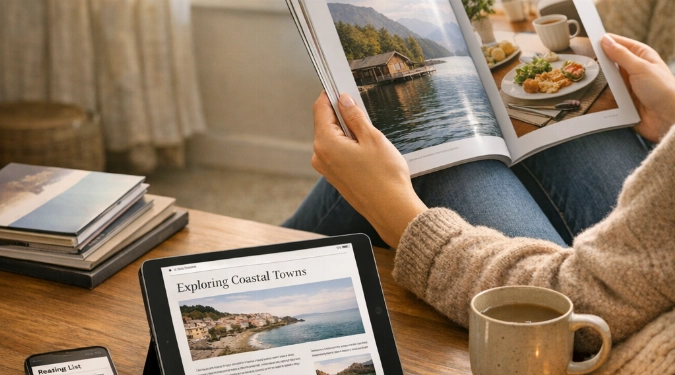
Magazine reading hasn’t disappeared, it has diversified. If you want to learn more about magazines and reading content, the real shift is how people mix print, apps, email newsletters, and audio to fit busy days without losing the depth magazines are known for.
What “Magazine Reading” Looks Like Now
Magazines today sit inside a larger menu of Magazines And Reading Content Options: a weekend print issue on the coffee table, a few saved digital articles on a phone, and a podcast version of a feature during a commute. This flexibility changes consumption patterns, not the core purpose: curated ideas, trustworthy voices, and topics with enough space to breathe.
The biggest change is timing. Digital access makes “issue day” less important because readers can dip in whenever they have five minutes. Print still tends to win for long, uninterrupted reading because it is naturally single-purpose and easier on attention.
Printed Vs Digital: How The Formats Actually Differ
When comparing Printed Magazines And Digital Content, it helps to look past preference and focus on function. Print offers tactile browsing, high-quality photography, and fewer interruptions. Digital offers search, portability, adjustable text size, and instant access to archives.
| Format | Strengths For Readers | Common Tradeoffs |
|---|---|---|
| Easy to focus, satisfying design, great for deep features | Storage clutter, no search, slower access to back issues | |
| Digital (Web/App) | Searchable archives, shareable, portable, accessibility tools | Notifications, paywalls, screen fatigue |
| Email Newsletter | Curated digest, builds a habit, lightweight reading | Inbox overload, limited layout and visuals |
How Topics And Content Types Guide What You Choose
Your best format often depends on Reading Materials And Magazine Topics. A design magazine might shine in print because images matter. A breaking-news weekly may feel more useful digitally because context evolves quickly.
Most Magazine Publications And Content Types fall into familiar buckets: long-form features, service journalism (how-to and advice), interviews, reviews, photo essays, and special issues. In digital editions, these expand into interactive graphics, short video clips, and “read-next” pathways that keep you exploring without flipping pages.
Subscriptions: What To Know Before You Commit
Subscription models have diversified too. Some publishers offer print-only, digital-only, or bundled access that includes archives. Many also pair a subscription with member-style perks such as ad-free reading, early access to special issues, or subscriber-only newsletters.
If you’re comparing Magazines And Subscriptions United States, look at three practical details: whether archives are included, how many devices can be used, and how cancellations work (for example, auto-renew settings). Libraries are also a major “try-before-you-commit” path through services like Libby and Hoopla, which can include digital magazines alongside books and audiobooks.
How To Build A Personal “Reading Stack” That Works
The most sustainable approach is a blended stack: one or two print titles for deep reading, a few digital favorites for quick check-ins, and a newsletter for curation. If you find yourself saving articles but never returning, try one small change: save fewer pieces and finish more of them.
For concrete starting points, many readers rotate among well-known titles such as The New Yorker (features and culture), National Geographic (science and photography), The Atlantic (ideas and policy), and Consumer Reports (product testing). The goal isn’t to read everything, it’s to choose publications whose editorial voice consistently matches your curiosity.
FAQs About Magazine Reading In Digital Times
Are digital magazines the same as a website?
Sometimes. Some publishers replicate the print layout as a “digital issue,” while others publish web-first articles with different editing, headlines, and multimedia elements. Checking whether a subscription includes a PDF-style replica, an app edition, or full web access can prevent surprises.
Do print magazines still matter if everything is online?
They often matter for attention and collection. Print supports slow reading, makes visual storytelling feel intentional, and can be easier to revisit. Many readers use print as a “weekly reset” away from scrolling.
How can I avoid paying for too many subscriptions?
Start with one title you’ll genuinely finish, then rely on library access for sampling. If a publisher offers a bundle, compare it against how many titles you actually read. Rotating subscriptions seasonally can also keep your reading fresh without stacking recurring charges.
Conclusion
Magazines today are less about choosing print or digital and more about matching format to the way you consume content. By understanding how magazine content types, topics, and subscription models work, you can build a reading routine that feels modern while keeping the depth that magazines have always delivered.
Disclaimer: The information provided in this article is for educational and informational purposes only. It does not constitute professional advice. Readers should conduct their own research and consult with qualified professionals before making any decisions.