
Kidney Failure Explained: How Much Water to Drink Each Day
Kidney failure can flip everyday hydration advice on its head: drinking “more” isn’t always safer, especially when urine output drops or dialysis is involved. This article explains how clinicians commonly determine daily fluid goals for kidney failure, including why total fluids (not just plain water) matter, how hemodialysis and peritoneal dialysis change limits, and why many plans are based on urine volume plus a measured allowance. You’ll also learn practical ways to manage thirst and what daily tracking (like morning weights and swelling) can reveal about whether your fluid target is working.
Kidney failure changes the “drink more water” advice most of us grew up with. The safest daily fluid amount can swing from “sip carefully” to “drink normally,” depending on urine output, swelling, and whether you’re on dialysis. Here’s how much water a person with kidney failure may be able to drink each day—and how clinicians typically decide.
Why Kidney Failure Changes Daily Water Needs
Healthy kidneys balance fluid by making urine. In kidney failure, that balancing system is impaired, so extra fluid may build up in the body instead of leaving as urine. That fluid can collect in the legs (edema), in the belly (ascites), or in the lungs (pulmonary edema), and it can raise blood pressure—one reason individualized water intake matters so much.
Clinicians often talk about “fluid” rather than only water. Fluid includes plain water, coffee/tea, milk, soup, gelatin, ice, and even very watery fruits. For people with kidney failure, that total daily fluid is what usually drives symptoms and weight changes between treatments.
How Much Water To Drink With Kidney Failure
There isn’t one universal number. “How much water should one drink in a day” becomes a kidney-stage question, not a general wellness question. A common medical approach is to base fluid limits on urine output and whether dialysis is used.
If You Are Not On Dialysis
Many people with advanced chronic kidney disease still make urine. In that situation, a nephrology team may allow a more flexible plan—often guided by swelling, shortness of breath, and blood pressure trends. Some people are told to drink to thirst; others are given a daily cap. The key is that water recommendations are typically tied to labs and symptoms, not a generic hydration rule.
If You Are On Hemodialysis
For in-center hemodialysis (commonly three sessions per week), fluid often needs tighter control because fluid gained between sessions must be removed during dialysis. A frequently used method is: daily fluid goal ≈ yesterday’s urine amount plus about 500 milliliters to cover insensible losses (like breathing and sweating). If urine output is very low, the daily allowance may be quite limited.
If You Are On Peritoneal Dialysis
Peritoneal dialysis removes fluid daily, so some people can drink a bit more than they could on hemodialysis. But the same principles apply: urine output, daily weights, blood pressure, and swelling guide limits. Dialysis prescription (such as dextrose concentration in dialysate) also affects how much fluid is removed, which can change your practical daily target.
A Quick Table Clinicians Commonly Use
| Situation | Typical Daily Fluid Approach | What It Tries To Prevent |
|---|---|---|
| Advanced CKD, still urinating | Often “drink to thirst” or a personalized cap based on swelling and blood pressure | Edema and uncontrolled hypertension |
| Hemodialysis with some urine output | Urine output + about 500 milliliters/day (individualized by the care team) | Large weight gains between treatments, shortness of breath |
| Hemodialysis with little to no urine | Tighter limit; often small, measured portions throughout the day | Fluid overload and difficult fluid removal during dialysis |
| Peritoneal dialysis | Often somewhat more flexible, adjusted to daily ultrafiltration and urine output | Chronic volume overload and low sodium control |
How To Tell If Your Fluid Plan Is Too High Or Too Low
Because kidney failure is dynamic, your “right” daily amount may change with infections, heat, new medications, or diet changes. Signs your total fluid may be too high can include fast weight gain over a day or two, tighter shoes or rings, rising blood pressure, or needing to sleep propped up. On the flip side, some people can feel dizzy, crampy, or unusually thirsty if fluid is too restricted or if dialysis pulls off fluid aggressively.
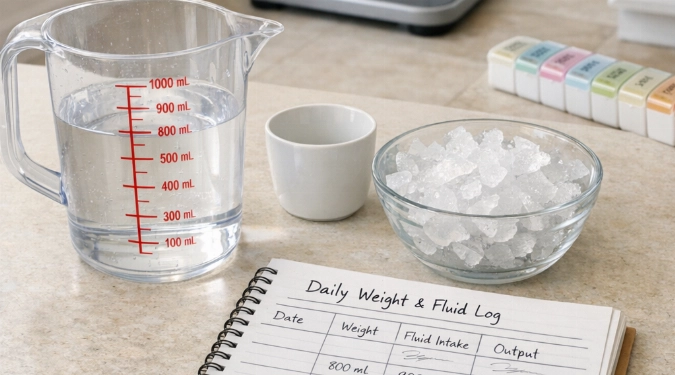
At home, many kidney clinics emphasize daily morning weights, tracking urine volume if asked, and noting swelling and breathing. Those observations help refine water intake without guessing.
Practical Ways To Stay Comfortable On A Fluid Limit
If your plan includes limiting fluids, the goal is comfort and stability—not willpower contests. Spreading drinks across the day, using a smaller cup, and measuring a daily pitcher can make limits feel more doable. Ice chips may last longer than a quick glass of water, but remember ice still counts toward the total once it melts.
Also consider hidden thirst drivers. High-sodium foods, salty snacks, and many fast-food meals can make you far thirstier and increase fluid retention. Dialysis dietitians often pair fluid guidance with sodium targets because lowering sodium frequently reduces thirst and helps control interdialytic weight gain.
FAQ: Kidney Failure And Daily Water Intake
How Much Water Should I Drink In A Day If I Have Kidney Failure?
The safest answer is the amount set by your nephrology team based on urine output and symptoms. Many plans use a measured daily total (all fluids), especially on hemodialysis. If you still urinate well, the plan may be more flexible but still monitored with weights, blood pressure, and swelling.
How Much Water Should You Drink In A Day If You Are On Dialysis?
Dialysis fluid targets are typically individualized. A commonly used framework is urine output plus about 500 milliliters per day, but it can be lower if urine output is minimal or if swelling and blood pressure are difficult to control. The dialysis team may also set a goal for weight gain between treatments.
Do Coffee, Soup, And Ice Count Toward Water Intake?
Yes. Most renal programs count all liquids and liquid-like foods toward daily totals. Even gelatin and ice count because they become fluid in the body. This is why tracking “fluids,” not just plain water, is central to safe water intake in kidney failure.
Can Drinking Too Much Water Worsen Kidney Failure?
Extra fluid does not typically “damage” kidneys directly, but in kidney failure it can accumulate and contribute to high blood pressure, swelling, and breathing problems. Those complications are why water recommendations may be stricter than general hydration advice.
Conclusion
Kidney failure makes hydration personal: the right daily fluid amount depends on urine output, dialysis type, and signs of fluid overload. If you’ve been wondering about water intake and what a safe daily target looks like, the most reliable path is a plan tied to daily weights, symptoms, and your lab and dialysis data—then adjusted as your condition changes.
Disclaimer: The information provided in this article is for educational and informational purposes only. It does not constitute professional advice. Readers should conduct their own research and consult with qualified professionals before making any decisions.