Informative Guide On Recovery Tools and Wellness Equipments
Training hard is easy. Recovering well is harder when your legs feel heavy, your sleep is off, and every product claims to be “the best.” It also gets confusing once you see rollers, guns, boots, heat, and trackers in one aisle. This guide helps you sort it out fast and spend wisely.
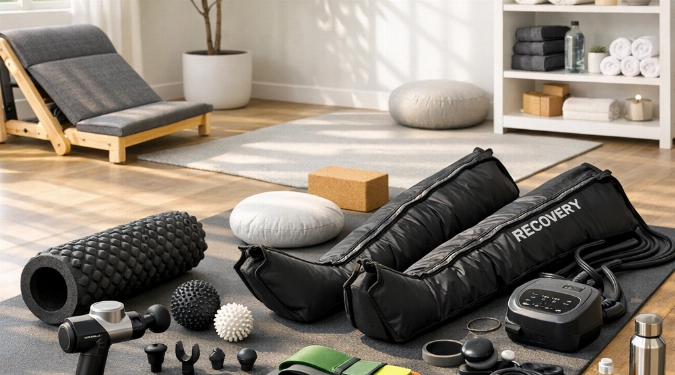
Choose recovery gear that matches your training, pain points, and schedule. This guide shows what each tool does, who it helps most, and what to skip. You will also get a simple buying checklist, a weekly routine template, and realistic price ranges for key items.
Start With A Quick Recovery Audit
Before you buy anything, sort your need into one bucket. Each bucket maps to different tools.
- Soreness after lifting: think pressure, heat, and gentle movement.
- Tight hips and ankles: think mobility tools and long holds.
- Swelling after long runs: think compression and elevation.
- Stress and poor sleep: think breath, light, and temperature.
Pick one primary bucket and one secondary bucket. That keeps your setup lean.
Tools That Actually Change Tissue Feel
Foam Rollers And Massage Balls
A foam roller gives broad pressure. A lacrosse ball or massage ball targets small spots. Use slow passes and pause on tender areas. Typical prices run $15 to $45 for rollers. Balls are usually $8 to $20.
Good options include TriggerPoint GRID, OPTP Pro-Roller, RumbleRoller, RAD Rounds, and a basic lacrosse ball. For softer bodies, try a high-density EVA roller instead of spiked styles.
Percussion Massage Devices
Percussion tools add rapid taps that can reduce perceived tightness. They are best for big muscle groups. Keep sessions short and avoid bony areas. Expect $80 to $399, depending on stall force and battery.
Common models are Theragun Prime, Hyperice Hypervolt Go, Ekrin B37, RENPHO R3, Bob and Brad C2, and LifePro Sonic. Choose one with a quiet motor if you will use it at night.
Equipment That Supports Circulation And Calm
Compression Boots And Sleeves
Compression can help legs feel fresher after high-volume days. Look for adjustable pressure and separate chambers. Boots usually cost $300 to $1,099. Calf sleeves are $25 to $80.
Well-known systems include Normatec 3, Hyperice Normatec Legs, Air Relax Classic, and Rapid Reboot. For travel, pack sleeves instead of full boots.
Heat, Cold, And Contrast Options
Heat can make movement feel easier before mobility work. Cold can reduce soreness perception after hard sessions. Reusable gel packs run $10 to $25. Heating pads are often $25 to $80.
For higher-end setups, look at an infrared sauna blanket at $150 to $600. Cold plunges and chillers vary widely. Many home setups land around $900 to $4,500.
Wellness Gear That Improves The Inputs
Sleep And Breath Tools
Recovery often fails because sleep and stress are off. A simple eye mask, nasal strips, and a white-noise machine can help. Budget $10 to $60 for basics.
If you like data, consider Oura Ring or WHOOP for sleep trends. Treat the numbers as signals, not verdicts. A basic pulse oximeter can also help track acclimation and illness trends.
Buying Checklist You Can Use In One Store Visit
- Goal: soreness, mobility, swelling, or sleep.
- Time: 5 minutes daily beats 45 minutes weekly.
- Noise: quiet tools get used more.
- Surfaces: carpet needs firmer rollers than rubber floors.
- Return policy: check it before you open the box.
- Red flags: sharp pain, numbness, or lingering swelling should be assessed by a clinician.
A Simple Weekly Routine Template
After training: 3 minutes of easy walking. Then 5 minutes of roller or ball work on the main area. Finish with 2 minutes of slow breathing.
On rest days: 10 minutes of mobility holds for hips, calves, and thoracic spine. Add heat first if you feel stiff.
After long runs: elevate legs for 10 minutes. Add compression if you like how it feels.
That stack works with most Recovery Equipment For Active Lifestyle goals. It is also easy to repeat.
Where People Overpay Or Get Misled
Do not chase extreme claims or influencer bundles. Most people only need two Muscle Recovery Tools And Accessories at first. Start with a roller and a ball, or a quiet mini massage gun.
Also watch keyword mashups in listings. You may see Wellness And Recovery Tools In Pune inside unrelated product pages. Focus on specs and return terms instead.
If you want Recovery And Wellness Equipment Options that last, prioritize build quality. Check warranty length, battery type, and replacement parts.
FAQs That Save Time
How long should a session be? Aim for 5 to 12 minutes. Stop if sensation turns sharp or you tense up.
Can I use a massage gun every day? Many people can tolerate light daily use. Rotate areas and keep intensity moderate.
What is the best first purchase? A medium-density foam roller is the best entry. Add a massage ball if you have one stubborn spot.
Do I need supplements for recovery? Some help certain people, but gear often solves the practical barrier. Start with sleep, hydration, and consistent movement.
What does “Recovery Tools And Wellness Equipment” include? It covers soft-tissue tools, compression, temperature therapy, and sleep support gear. It also includes tracking devices used for recovery habits.
Disclaimer: The information provided in this article is for educational and informational purposes only. It does not constitute professional advice. Readers should conduct their own research and consult with qualified professionals before making any decisions.