
Informational Guide to Amazon Flex Package Delivery by Your Car
Amazon Flex sounds simple until you hit gated apartments, bad map pins, and a trunk full of unsorted boxes. This guide breaks down the Flex signup steps, car setup, and a fast-loading system that works in small vehicles. You’ll also learn the biggest time traps and how to track real profit.
What Amazon Flex Really Is In A Car
You pick delivery “blocks” in the Flex app. A block is a set time window. You drive to a pickup site, scan packages, then run a route. Most routes are small boxes, padded mailers, and bags. Some are heavier, awkward, or oddly shaped.
You use your own phone for navigation and scans. You use your own car for storage and driving. Your results depend on speed, parking choices, and how you organize stops. Small mistakes add up fast.
What To Check Before You Apply
Before you start an amazon flex driver application, make sure your setup fits the job. This work is easier with a reliable car and a clean routine. It is harder if you hate stairs, tight parking, or app-driven deadlines.
- Vehicle: a sedan can work, but a hatchback, wagon, or small SUV loads easier.
- Phone: strong battery health and enough storage for updates.
- Data: stable service in warehouses, suburbs, and dead zones.
- Time: blocks often start early, or run into evening traffic.
How To Become A Flex Driver, Step By Step
If you want amazon delivery with your own car, treat the signup like onboarding for any contractor platform. The steps can vary by area and demand. This is the typical path.
- Download the Amazon Flex app and create an account.
- Complete identity checks and required documents.
- Consent to a background check and wait for approval.
- Watch training videos in the app and confirm availability.
- Accept a block and show up early for your first pickup.
If you are searching “apply for amazon flex driver,” expect pauses. Verification and availability can take time. Keep notifications on, and check the app at common refresh times.
Vehicle Setup That Saves Minutes On Every Block
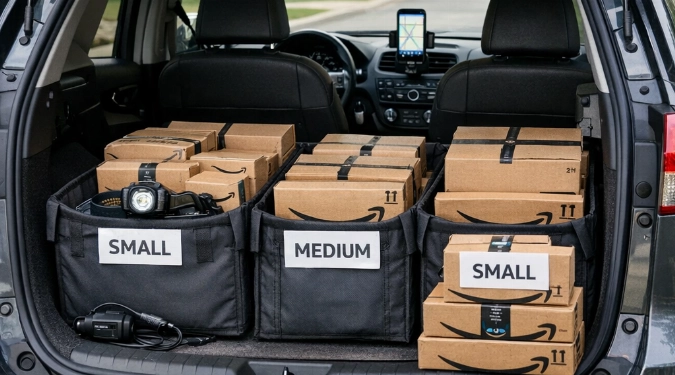
The goal is fewer “digging” moments at stops. You want one smooth motion from park to drop. Basic gear helps more than fancy gear.
- Two collapsible bins for envelopes and small boxes.
- A non-slip cargo mat to stop sliding stacks.
- A headlamp for porch numbers and dark entries.
- A phone mount and a fast car charger.
- Weather gear: poncho, microfiber towel, spare gloves.
- Permanent marker for quick package notes, if needed.
Good vehicle types include the Honda CR-V, Toyota RAV4, Subaru Outback, Mazda CX-5, Kia Sportage, and Ford Escape. They swallow bulky routes better than a tight trunk. Sedans still work with strict organization.
Loading Method That Works In A Small Car
Loading is where most new drivers bleed time. Do not throw everything in and hope the app saves you. Build zones so your next stop is always reachable.
Use Three Zones
- Front seat: next 10 to 15 stops, mostly envelopes.
- Back seat: mid-route boxes you can grab quickly.
- Trunk: bulky items and late-route overflow.
Sort By Stop Order
When you scan, the app shows a stop list. Stack by rough order in chunks. Keep labels facing up. If you must reshuffle, do it once at pickup, not at every curb.
The Time Traps That Kill Earnings
These traps turn a decent block into a slog. Plan for them before you leave the pickup lot. Your goal is fewer surprises.
- Apartments: broken call boxes and long walks from legal parking.
- Gates: codes missing or a resident must buzz you in.
- School zones: slow traffic and no-stopping rules.
- Downtown: paid parking, loading zones, and one-way streets.
- Bad pins: the map drops you behind the building.
Keep a simple rule for delays. If access is blocked, document in-app prompts quickly. Then move on to the next stop when allowed by policy.
Pay Reality And Cost Reality In Your Own Car
People search for amazon delivery jobs own car thinking only about block pay. Your net depends on miles, idle time, and car costs. Track it like a small business.
| Cost Category | What Drives It | Typical Range Per 100 Miles | How To Control It |
|---|---|---|---|
| Fuel | Speed, traffic, AC use | 3.0–6.0 gallons | Smoother driving, avoid long idles |
| Maintenance | Tires, brakes, oil, filters | 8–15 minutes of admin time | Set service reminders, rotate tires |
| Depreciation | Miles and wear | High on newer cars | Use an older, reliable vehicle when possible |
| Insurance | Policy terms and driving record | Varies by carrier | Ask about delivery use and coverage gaps |
Log miles and time every block. Use a mileage tracker app or a notebook. You need clean records for taxes and true profit.
Your First Block Plan
New drivers rush and get flustered. Go in with a simple plan you can repeat.
- Arrive 15 minutes early and park for an easy exit.
- Scan, then sort once with the three-zone method.
- Pick a safe first stop to settle into the workflow.
- Avoid risky parking. Add a short walk instead.
- After the block, write one fix for next time.
This is how you keep amazon delivery with own car sustainable. Small process tweaks beat “hustle harder” every time.
FAQs
Can I Switch Cars After I’m Approved?
Usually, yes, if the app allows adding or updating vehicles. Keep details accurate. Pickup staff may check that your car matches your profile.
What Makes A Route Feel Impossible?
It is often building access, not package count. High-rise clusters, no-parking streets, and bad map pins create the worst time loss.
Is There A Best Day To Start?
Start on a day with low personal stress and extra time. Your first run will be slower. Avoid stacking plans right after.
References
- Amazon Flex (official program information and app guidance)
- IRS guidance on mileage logs and recordkeeping for independent contractors
- State DMV and insurance carrier guidance on vehicle use and coverage
Disclaimer: The information provided in this article is for educational and informational purposes only. It does not constitute professional advice. Readers should conduct their own research and consult with qualified professionals before making any decisions.