How to Choose Roofing Materials That Last Longer
Roofs fail early for predictable reasons: bad detailing, mismatched materials, and trapped moisture. If you are comparing quotes and claims, it is hard to know what actually lasts. This article is for homeowners who want fewer repairs, clearer tradeoffs, and smarter questions before signing.
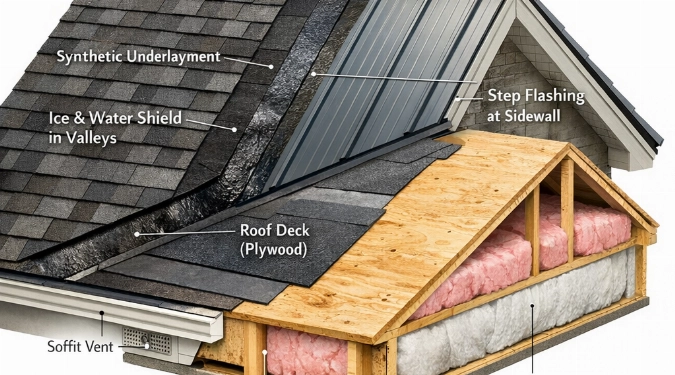
Know which roof material fits your wind, rain, heat, and hail profile. Learn what underlayment, flashing, and ventilation actually do for lifespan. This guide helps you compare options by cost, weight, and maintenance. You will leave with a short list you can price with confidence.
Start With The Three Failure Points
- Water entry at joints. Most leaks start at valleys, chimneys, skylights, and step flashing.
- Heat and moisture trapped below. Poor airflow bakes shingles and rots decking.
- Fastener and coating breakdown. UV and salt air can destroy cheap finishes fast.
Pick materials that solve your most likely failure point first. Then chase looks and color.
Match Material To Weather Loads
High Wind And Storm Debris
Look for high wind ratings and tested fastening patterns. Architectural asphalt shingles with strong sealant strips can work if installed to spec. Metal panels with concealed clips resist uplift well. Avoid light tiles on weak framing.
Hail And Freeze Thaw
Impact ratings matter more than thickness claims. Some polymer-modified asphalt shingles are rated Class 4. Metal dents but rarely leaks if seams stay tight. Clay can crack from impact. Concrete can spall if water gets inside.
Hot Sun And Coastal Salt
UV attacks binders and exposed membranes. Choose reflective finishes and thicker coatings. For metal, prefer aluminum or zinc-aluminum coatings like Galvalume. Near salt spray, specify stainless fasteners and isolated dissimilar metals.
These are key roofing performance factors that decide real lifespan.
Compare The Main Residential Roofing Options
- Architectural asphalt shingles. Typical life is 20 to 35 years. Look at GAF Timberline HDZ, Owens Corning Duration, and CertainTeed Landmark.
- Standing seam metal. Typical life is 40 to 70 years. Consider Colorbond steel systems, Englert, and McElroy panels.
- Clay tile. Typical life is 50 to 100 years. Brands include Ludowici and Redland. Weight and broken pieces are the tradeoffs.
- Concrete tile. Typical life is 40 to 70 years. It is durable but needs good underlayment.
- Natural slate. Typical life is 75 to 150 years. It demands skilled detailing and strong framing.
- Single ply membranes for low slope. TPO and PVC can last 20 to 30 years. EPDM can run longer with good seams.
Design Choices That Quietly Extend Life
Some modern roof design materials fail early if the geometry is wrong. Keep valleys open and accessible for cleaning. Minimize skylights and dead valleys. Avoid mixing copper with galvanized steel. Specify wider drip edge on fascia boards.
Consider shade, tree drop, and foot traffic. Add walkway pads on membrane roofs. Choose darker colors only if the attic is well vented.
Insulation And Moisture Control Checklist
Roof insulation layers change roof temperature and drying ability. Ask your contractor for a simple section sketch.
- Confirm air sealing at ceiling penetrations.
- Use vapor control where indoor humidity is high.
- Keep insulation from blocking soffit airflow.
- On low slope, confirm tapered insulation for drainage.
Material Selection Questions To Ask Before You Sign
- What is the tested wind rating for this exact assembly?
- Which underlayment and valley method will you use?
- How will you flash walls, chimneys, and penetrations?
- Who registers the manufacturer warranty, and what voids it?
- What is the maintenance plan for the first five years?
FAQ
How Can I Spot A Roof That Was Installed Poorly? Look for exposed nails, sloppy sealant, and uneven courses. Check for missing kickout flashing at wall ends. Inside the attic, look for wet sheathing near valleys.
Is “Lifetime” Shingle Warranty A Real Lifespan? It is a limited warranty term, not a service life promise. Coverage can be prorated and labor may be excluded. Ask for the full warranty document before choosing.
When Is A Roof Better Repaired Than Replaced? Repairs make sense when the deck is sound and leaks are isolated. Multiple leak points often mean systemic flashing or underlayment failure. A roofer can document conditions with photos during a small tear-off.
Disclaimer: The information provided in this article is for educational and informational purposes only. It does not constitute professional advice. Readers should conduct their own research and consult with qualified professionals before making any decisions.