How Marine Surplus Fits into Boating and Repairs
Marine parts pricing can feel random, and bad “deals” can turn into weeks of troubleshooting. Boat owners and DIY repair folks often need a safe way to shop surplus without risking unreliable installs. The challenge is knowing what’s truly reusable, what’s worn out, and what needs proof.
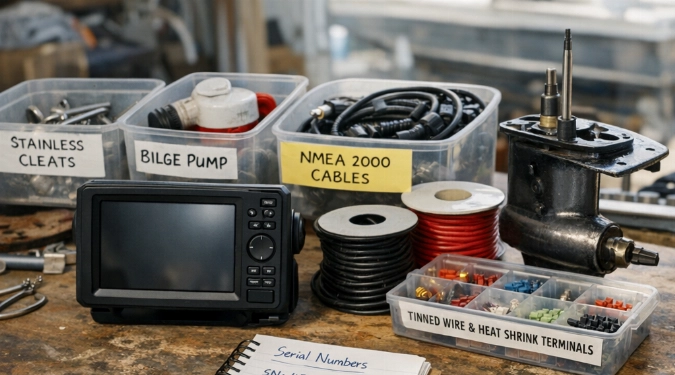
You’ll learn where marine surplus parts come from and which ones are safe bets. You’ll get a quick inspection routine for engines, electronics, and deck gear. You’ll also see how to price buys, avoid counterfeits, and document installs so repairs stay reliable later.
What “Surplus” Means On The Water
Surplus is not one thing. It is a mix of overstock, insurance recoveries, fleet upgrades, and old inventory. Some items are unused but aged. Others are removed from running boats. The job is sorting “cheap” from “false economy.”
Common sources include marina refits, charter fleet repowers, and government auctions. You also see warehouse cleanouts after model changes. That is where oddball brackets and harnesses appear. It is also where you can find real gems.
Where The Best Deals Actually Come From
Look for sellers who can explain provenance in one minute. “Pulled from a 2018 repower” beats “came from a storage unit.” Ask for serial tags, photos of connectors, and a receipt trail.
Good hunting grounds include boatyard consignment racks, insurer liquidation lists, and regional marine recyclers. Online, focus on listings with clear tag photos and return terms. In person, a solid marine store near me often has a back shelf of take-offs.
Parts That Are Worth Buying Used
Used boat equipment can be a smart call when failure is not catastrophic. Stainless deck hardware, cleats, windlass gypsies, bow rollers, and hatches often clean up well. So do non-structural rails and mounts.
Many used marine equipment wins are “metal and plastic.” Avoid critical items with hidden fatigue. Standing rigging, unknown chainplates, and impact-loaded hardware are higher risk.
Engines And Drives: How To Vet The Big Ticket Stuff
Surplus marine engines for sale can save real money, but only with checks. Start with the data plate. Confirm model, year, and shaft length, or drive ratio.
Do three quick inspections. First, compression or leak-down numbers from a recent report. Second, gearcase oil condition and magnet fuzz. Third, corrosion around exhaust and cooling passages.
Ask about control compatibility. Many headaches come from mismatched throttles and harnesses. Brands to know include Yamaha, Mercury, Suzuki, Honda, Evinrude, and Volvo Penta.
Electronics: Avoid The “Dead On Arrival” Trap
Marine electronics near me are tempting at swap meets. Electronics fail quietly, so verify power-up, touch response, and backlight evenness. Ask for the NMEA 2000 drop cable, mounting bracket, and sun cover.
Check that maps and features are still supported. Older chartplotters may lose updates. Pay attention to network versions and transducer pairing.
Common brands include Garmin, Raymarine, Simrad, Furuno, Lowrance, and B&G. If a unit is locked to an account, walk away.
NOS Inventory: New, But Not Always Ready
Nos marine equipment means it was never installed. Age still matters. Rubber impellers take a set. Seals harden. Capacitors and LCDs can degrade in heat.
Inspect packaging for water marks. Open boxes and confirm every fastener and gasket. For pumps and carb parts, plan a rebuild kit anyway.
Pricing: Use A Simple “All-In” Math
Use an all-in price, not a sticker price. Add consumables, missing brackets, and your time. A fair rule is to target 40% to 70% of current retail.
For electronics, tighter is better. Aim for 30% to 55% unless it includes transducers. For engines, condition rules everything. A clean take-off might be 60% to 80% of new.
If you must pay for a survey or bench test, budget $150 to $450. That cost can save a repower mistake.
Install Notes That Prevent Future Repair Pain
Take photos before removal and after routing. Label wires with heat-shrink tags. Save manuals as PDFs and note software versions.
Use marine supplies meant for the job. Choose tinned copper wire, adhesive-lined heat shrink, and marine-grade terminals. For sealing, use 3M 4200 or Sikaflex 291 where removal may matter.
Keep a small log of part numbers and torque notes. That record makes the next repair faster.
What To Skip Even If It’s Cheap
Skip anything that can sink the boat fast. Avoid unknown seacocks, through-hulls with dezincification, and suspect hose clamps. Skip fuel hoses without legible rating marks.
Be cautious with batteries and inflatable safety gear. Unknown history is the issue. For commercial marine equipment, confirm it meets current standards and has traceable inspection tags.
Quick Checklist Before You Pay
- Serial tag photo matches the listing.
- No cracked housings, stripped threads, or swollen electronics screens.
- All connectors are present and uncut.
- Seller states why it was removed.
- Return terms are clear in writing.
- You have a plan for gaskets, seals, and fasteners.
FAQs That Come Up In Real Shops
How Do I Spot Counterfeit Hardware?
Look for sloppy cast marks and mismatched fasteners. Compare weight to known parts. If “316” is not stamped, treat it as unknown stainless.
Can I Mix Old And New Electronics On One Network?
Usually, yes, but check protocol versions. NMEA 0183 and NMEA 2000 need a gateway. Also confirm power draw and fuse sizing.
What Should I Keep On Hand For Small Repairs?
A smart kit includes spare bilge pump float switch, fuses, terminals, hose clamps, and a tube of sealant. Add a multimeter and a crimp tool.
Disclaimer: The information provided in this article is for educational and informational purposes only. It does not constitute professional advice. Readers should conduct their own research and consult with qualified professionals before making any decisions.