Home Temperature Guide: Ideal for Comfort and Cost Savings
Thermostat advice is all over the place, and your house never matches the “average” home. You might be juggling cold bedrooms, humidity, pets, or a higher bill than expected. This guide is for anyone who wants a simple, reliable temperature plan that fits real daily routines.
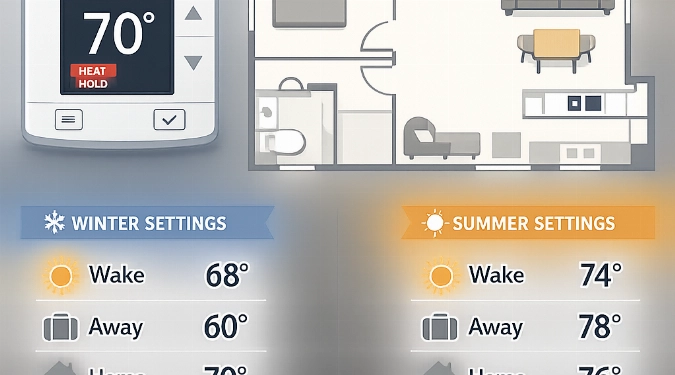
Set your thermostat like a pro without guessing. This guide gives exact temperatures for sleep, work, and away times in both seasons. You’ll also learn which settings save money, which ones backfire, and how to program smart schedules that keep comfort steady and bills lower.
Start With Your Real Goal
Pick one priority for each season: comfort, cost, or humidity control. Chasing all three at once leads to constant tweaks. Constant tweaks often cause longer HVAC run times.
Use a simple rule. Smaller changes you keep are better than big changes you hate. Aim for a schedule you can follow for weeks.
Winter Settings That Usually Work
For most homes, the best thermostat temperature for daytime comfort lands in the mid to upper 60s. Many people prefer 68°F while home and awake. Start there, then adjust by 1°F for three days.
At night, set it lower. A common overnight thermostat temperature is 60°F to 67°F, depending on blankets and drafts. If you wake up cold, raise it by 1°F and stop.
If you are gone for several hours, reduce the setpoint. A practical answer to what should i set my thermostat to in the winter when away is 55°F to 62°F. Use the higher end if pipes are in exterior walls.
Empty House, Real Risks
People ask, should you leave the heat on in an empty house during the winter. Turning it fully off can risk frozen pipes in cold snaps. A setback range near 55°F to 60°F is a safer baseline in many homes.
Your thermostat heat temperature should also reflect your building. Older homes with air leaks may need smaller setbacks. That helps avoid long recovery runs.
Summer Settings That Keep Humidity In Check
Cooling costs jump fast when you chase a chilly indoor feel. A solid starting point for the best home temperature in summer is 74°F to 78°F when home. Use ceiling fans to feel 3°F to 4°F cooler.
At night, many sleepers do well around 74°F to 78°F. If your home gets sticky overnight, lower the setpoint slightly. A common thermostat night temperature summer range is 74°F to 76°F for humidity control.
When away, raise the setpoint. Try 80°F to 85°F for a workday absence. Avoid turning the system off if humidity climbs, since it can soak materials and smell musty.
Constant Temperature Vs Setbacks
Many people wonder, is it better to keep your thermostat at a constant temperature. In most cases, setbacks save energy because your home loses heat slower at lower indoor temps. The same logic helps in summer when you let the home warm up.
There are exceptions. Heat pumps can lose efficiency with very deep setbacks in some homes. Poor insulation can also make recovery feel slow.
Best Thermostat Settings For Energy Savings
Use scheduling, not willpower. Set four daily periods: wake, away, home, sleep. That setup delivers the best thermostat settings for energy savings in most households.
- Wake: comfortable setpoint you will not fight.
- Away: winter down, summer up.
- Home: stable comfort block for evenings.
- Sleep: cooler in winter, slightly warmer in summer.
If you use a smart thermostat, build a schedule first. Then turn on learning features if you like. Popular options include Ecobee Smart Thermostat Premium, Google Nest Learning Thermostat, Honeywell Home T9, Emerson Sensi Touch, Amazon Smart Thermostat, and Bosch BCC100.
Quick Checks That Improve Results
- Replace a 1-inch filter every 1 to 3 months, depending on dust and pets.
- Use door sweeps and foam outlet gaskets on exterior walls.
- Close blinds on sunny windows in summer, open them on sunny windows in winter.
- Set ceiling fans to spin counterclockwise in summer and clockwise in winter.
These small changes are energy saving tips that make your thermostat settings actually work. Without them, you may overcorrect the temperature.
FAQ: Tight Answers To Common Setting Questions
What Temperature Should I Set My Thermostat In Winter To Save Money?
Use the lowest setpoint you can comfortably keep while home and awake, then add a nighttime setback. If you want one number, start at 68°F daytime and adjust slowly.
What Is The Best Thermostat Temperature For Pets?
Most healthy dogs and cats do fine with typical human comfort ranges. Provide water and shade in summer. Ask your vet for limits if your pet is very young, old, or short-nosed.
What Temperature To Set Thermostat If My Upstairs Runs Hot?
Do not “fix” airflow problems with colder settings. Try closing some downstairs vents, running the fan in “circulate,” and using a bedroom fan. If needed, ask about zoning or attic air sealing.
Disclaimer: The information provided in this article is for educational and informational purposes only. It does not constitute professional advice. Readers should conduct their own research and consult with qualified professionals before making any decisions.