Healthy Resting Heart Rate by Age: Quick Breakdown
Your smartwatch says one number, your doctor mentions another, and the internet argues about what’s “good.” If you’re trying to sanity-check your resting pulse, age can help, but context matters more. This article is for anyone who wants a clearer range and knows trends can signal change.
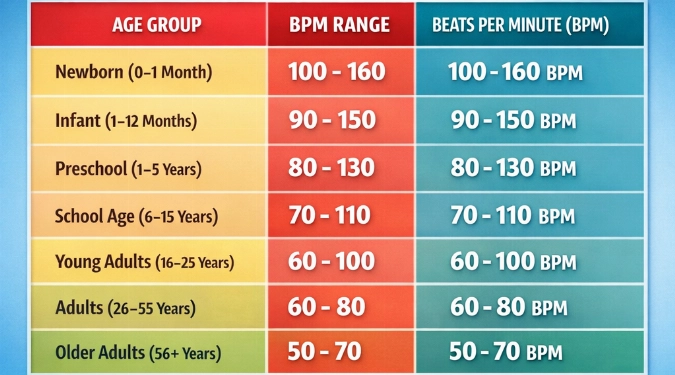
Use a simple morning pulse check to track your baseline. Compare your number to age-based ranges and learn what shifts them. This guide also shows red flags, common causes of sudden changes, and how to log readings so a clinician can use them. Use it in five minutes.
How To Measure Resting Heart Rate Correctly
Measure at rest, not after coffee, stress, or a shower. Aim for the same time each day, ideally after waking and using the bathroom. Sit quietly for five minutes. Then check your pulse for 30 seconds and double it.
You can use fingers on the wrist, or a device. If you use a wearable, confirm it once with a manual count. Popular options include Apple Watch, Fitbit, Garmin, Oura Ring, Withings ScanWatch, and Polar chest straps.
Healthy Resting Ranges By Age
For most adults, a resting rate from 60 to 100 beats per minute is typical. Athletes and very fit adults can sit lower. Stress, illness, and dehydration can push it higher.
| Age | Common Resting Range | Notes To Know |
|---|---|---|
| 18–39 | 60–90 bpm | Lower can be normal with endurance training. |
| 40–59 | 60–95 bpm | Sleep debt and alcohol often raise baseline. |
| 60–69 | 60–100 bpm | Medication effects become more common. |
| 70+ | 60–100 bpm | Watch for new irregularity, not just the number. |
These ranges support quick self-checks for healthy heart rate by age. Baseline matters more than one reading. A consistent jump of 10 to 20 bpm at rest is worth noting.
What Changes Resting Heart Rate Fast
Short-term spikes are usually about context. Fever often raises heart rate. Dehydration can do the same. Pain, anxiety, and poor sleep also push it up.
Lower readings can happen with improved fitness or deep relaxation. They can also happen with some medicines. If low numbers come with dizziness or fainting, get checked.
How To Use Your Number In Real Life
Log three pieces of info for each reading. Write your rate, the time, and what might skew it. Examples include alcohol, a new workout, or a cold.
Use a simple rule. Compare today’s number to your own 14-day average. That beats comparing yourself to strangers online.
Senior-Focused Checks That Matter
Heart rate guidelines for seniors focus on patterns. New irregular beats, new shortness of breath, and reduced exercise tolerance matter. So does a new resting rise that lasts several days.
If you are tracking a healthy heart rate for those over 60, add one more metric. Note how far you can walk before needing a pause. Pair that with your pulse trend.
Medication And Supplement Triggers To Ask About
Bring a full list to your clinician, including supplements. Some drugs linked to irregular heartbeat can be obvious. Others are easy to miss. Ask specifically about these categories:
- Decongestants that contain pseudoephedrine or similar stimulants.
- Thyroid replacement doses that are too high.
- Some asthma inhalers that raise heart rate.
- Some antidepressants that affect rhythm in susceptible people.
- Some antibiotics that can prolong QT in higher-risk patients.
- Energy drinks and high-dose caffeine pills.
Do not stop a prescription on your own. Use the list to guide a medication review.
When A “Normal” Number Is Not Reassuring
Many people ask, what is a normal heart rate, and stop there. A normal number can still hide an irregular rhythm. If your pulse feels uneven, note it even if the average looks fine.
Seek urgent care for chest pressure, fainting, or severe shortness of breath. Call emergency services for sudden severe symptoms. Fast action matters more than home tracking.
Quick Checklist For Your Next Appointment
- Bring 14 days of morning readings and notes.
- List new meds, dose changes, and supplements.
- Describe any skipped beats, fluttering, or pounding.
- Note caffeine, alcohol, sleep, and recent illness.
Clinicians can use this to interpret healthy resting heart rates by age in context. It also speeds up decisions about testing like an ECG or a Holter monitor.
References
- American Heart Association (AHA): Heart rate basics and general resting ranges.
- National Heart, Lung, and Blood Institute (NHLBI): Arrhythmia overview and symptom guidance.
- Mayo Clinic: Resting heart rate interpretation and when to seek care.
Disclaimer: The information provided in this article is for educational and informational purposes only. It does not constitute professional advice. Readers should conduct their own research and consult with qualified professionals before making any decisions.