
Guide to Skin Rashes Associated with Hepatitis
A sudden rash plus fatigue, nausea, or dark urine can feel confusing. Many people worry it is allergies, an infection, or a liver issue. Hepatitis can show up on skin in several different ways, and some patterns need faster care. This article helps you sort what you’re seeing.
Spot whether a rash could be liver related. Learn the rash patterns that show up with different hepatitis types. Use a simple checklist to track symptoms, photos, and lab results. Know what to ask in urgent care, dermatology, or a liver clinic. Get safer itch relief while you wait.
What “Hepatitis Rash” Usually Means
A “hepatitis rash” is not one single rash. It is skin inflammation triggered by liver injury, immune activity, or bile buildup. Some rashes come from the virus itself. Others come from complications like vasculitis. A few come from treatment side effects. The phrase hepatitis skin rashes is most useful as a starting label. The next step is pattern matching. You are looking at color, shape, location, and timing.
Rash Patterns That Point Toward Liver Involvement
Hives And Itchy Welts
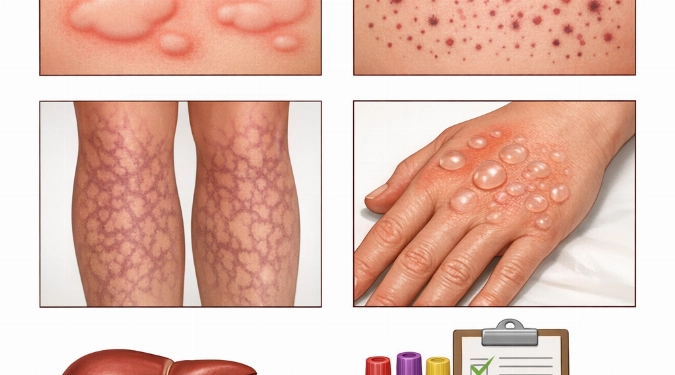
Transient, raised welts can appear with acute viral illness. They often move around the body. They can worsen at night. People searching hepatitis and itching often describe this stage. Itch can come before yellowing of the eyes. It can also happen without jaundice.
Small Purple Dots Or Bruise-Like Spots
Non-blanching purple dots suggest bleeding under the skin. Causes include low platelets or inflamed small vessels. Do not ignore this pattern.
Lacy Purple Rash On Legs
A net-like purple pattern can suggest blood vessel spasm or inflammation. In hepatitis C, it can appear with cryoglobulinemia. It may come with numbness or joint pain.
Blisters Or Fragile Skin On Sun Areas
Easy blistering on the backs of hands can fit porphyria cutanea tarda. It is linked to hepatitis C, alcohol, and iron overload. Sun exposure often triggers flares.
Skin Clues That Matter More Than Color
These skin clues hepatitis patterns help triage risk.
- Blanching: Press with a clear glass. If redness disappears, it is more likely inflammation than bleeding.
- Speed: Hours suggests hives. Days suggests dermatitis or viral exanthem. Weeks suggests immune complications.
- Distribution: Palms and soles are a red flag in many infections.
- System symptoms: Fever, dark urine, or right upper belly pain raise concern.
Other Symptoms To Log With The Rash
Rashes rarely travel alone. Track general symptoms of hepatitis in the same notes. Include fatigue, nausea, appetite loss, pale stools, and dark urine. Also note early signs of hepatitis that can be subtle. Examples include new intolerance to alcohol, a “flu” that does not resolve, and new widespread itch.
A Practical “Identify My Rash” Checklist
If you are trying to identify my rash, collect better data before your visit.
- Take photos in daylight, plus one close-up with a coin for scale.
- Write the start date, any new supplements, and new skin products.
- List exposures: tattoos, needlesticks, shared razors, or unprotected sex.
- Note triggers: heat, showers, pressure, and sun.
- Record urine and stool color changes.
Causes That Change The Skin Story
The causes of hepatitis include viruses A through E, alcohol, fatty liver disease, autoimmune hepatitis, and drug injury. Viral causes matter because some have signature rashes. A clinician will also ask about medical hepatitis, meaning drug-induced liver injury. Common culprits include high-dose acetaminophen, some antibiotics, and certain herbal extracts. Some people ask about “good hepatitis.” That phrase is misleading. Hepatitis always means liver inflammation. The “good” part usually refers to treatable types.
What Labs And Exams Usually Clarify
Your hepatitis presentation guides testing. A typical workup includes AST, ALT, alkaline phosphatase, bilirubin, INR, and a complete blood count. Viral serologies are added based on risk. A solid hepatitis diagnosis often needs more than one test. Timing matters. Antibody tests can lag behind symptoms.
Where Chronic Active Hepatitis Fits
The term chronic active hepatitis is older. It describes ongoing liver inflammation on biopsy. Skin findings then often relate to chronic immune activity or cholestasis.
When To Seek Urgent Care
Go promptly for trouble breathing, facial swelling, or widespread blistering. Seek urgent evaluation for confusion, severe sleepiness, vomiting with dehydration, black stools, or rapidly spreading purple spots.
References
- Centers for Disease Control and Prevention (CDC): Viral Hepatitis information
- National Institute of Diabetes and Digestive and Kidney Diseases (NIDDK): Hepatitis resources
- American Academy of Dermatology (AAD): Guidance on rashes and hives
Disclaimer: The information provided in this article is for educational and informational purposes only. It does not constitute professional advice. Readers should conduct their own research and consult with qualified professionals before making any decisions.