
Guide to Part-Time Concert Event Helper Jobs
Part-time concert event helper roles are the behind-the-scenes support shifts that keep live shows running smoothly, from load-in and doors to post-show breakdown. This guide explains what concert helpers typically do, the most common role types (front of house support, back of house runners, and load-in/load-out crew), and how staffing usually works between venues, promoters, and event companies. You’ll also learn what skills matter most on show day, how hours are commonly structured for “call” based work, and how concert work differs from festival event management. A comparison table and FAQs help you evaluate the setting, expectations, and legitimacy signals of an events company before you commit your time.
Concerts run on more than talent and ticket scans. If you’re curious about part-time concert event helper work, this guide breaks down what the roles look like on show day, what skills matter, and how people typically connect with the teams that build live nights from load-in to load-out.
What A Part-Time Concert Event Helper Typically Does
A “concert event helper” is an umbrella term for short-shift, hourly support roles used by venues, promoters, and production crews. The work is practical and time-bound: set tasks, tight timelines, and clear reporting lines. It’s a common entry point for people interested in working in events without committing to a full-time touring schedule.
Most helpers rotate between pre-show setup, doors and guest flow, and post-show breakdown. Your exact duties depend on the venue size, the artist’s production needs, and which events company is staffing the date.
Common Role Types You’ll Hear On-Site
Front Of House Support
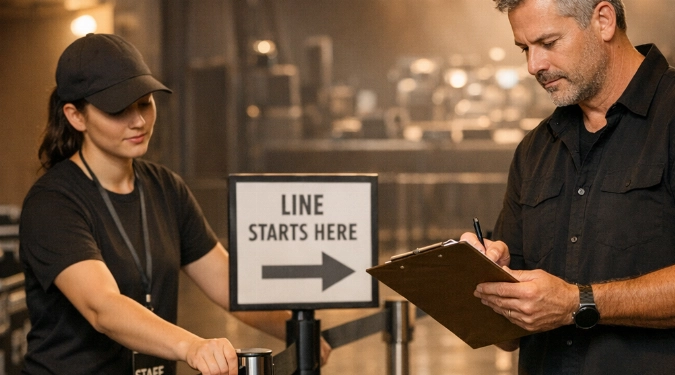
These roles support the audience-facing side: scanning tickets, directing lines, checking wristbands, handing out credentials, and assisting guest services. In many buildings, this group coordinates closely with venue security and the house manager.
Back Of House And Production Runners
Back-of-house helpers may assist with simple runs, signage placement, and moving approved items between dock, green room, and production office. On larger shows, a runner might support departments like audio, lighting, or stage management, without touching specialized gear unless trained.
Load-In And Load-Out Crew
This is physical, time-sensitive work: pushing cases, laying cable ramps, placing barricades, and keeping paths clear. Calls are often short (for example, a few hours), but start times can be early or late depending on the tour schedule.
How The Concert Staffing Ecosystem Works
Concert dates are often staffed through a mix of venue teams and outside partners. You’ll hear terms like event organizers, event organisers, and event agency europe when comparing how different markets operate, but locally the structure is usually similar: a promoter books the show, the venue hosts, and specialists execute. Some concert event management companies handle staffing packages, while others provide production labor only.
You may also see staffing coordinated by event companies that cover multiple venues, sports, and live entertainment. Understanding who owns which piece (venue, promoter, production) helps you ask clearer questions and avoid confusion when searching phrases like event companies near me or event companies.
Skills And Expectations That Matter On Show Day
Reliability often outranks experience. Teams need people who arrive on time, follow radio etiquette, and can work calmly around crowds, cables, forklifts, and tight turnarounds. A few capabilities that commonly help are: basic crowd-direction communication, comfort standing for long periods, and the ability to take instructions quickly.
Safety is part of the job. Expect briefings on emergency exits, weather procedures for outdoor shows, and “keep clear” zones near rigging and motors. Many venues also expect closed-toe shoes and dark, logo-free clothing to blend into house standards.
Where People Usually Find Legitimate Part-Time Concert Helper Roles
This site doesn’t list roles, but you can understand the most common channels. Venues often maintain event-day staffing rosters. Large operators may route staffing through companies such as Live Nation (venue operations and promotion) or AEG Presents (promotion), while local theaters use in-house teams plus overflow labor. For conversion-style work, you may encounter providers like Encore (event technology) for corporate events, and for crowd support you may see firms like Allied Universal (venue security) depending on the building.
When you search “work events near me,” focus on verifying who the employer is (venue, staffing agency, promoter) and what the call time and department are. Similarly, searches like event company near me or events company near me are more useful when paired with a venue name and the term “event staff” or “stagehand call.”
Pay And Hours: What “Part-Time” Usually Means In Concert Work
Part-time concert helper shifts are commonly structured as “calls” that can run 4 to 8 hours, with longer days during festivals or multi-act productions. Some departments may have split calls (load-in earlier, load-out later). Work volume can change week to week based on the venue calendar, tour routing, and seasonality.
Because schedules fluctuate, many people combine concert calls with adjacent roles in festival event management, venue ushering, or corporate event support to build steadier weekly hours.
A Quick Comparison Of Common Work Settings
| Setting | What Helpers Often Do | What To Expect |
|---|---|---|
| Indoor Club Or Theater | Doors support, simple reset, guest flow | Fast turnarounds, smaller teams, multitasking |
| Arena Or Stadium | Credential checks, crowd routing, large-scale load-in assistance | More structure, longer walks, multiple supervisors |
| Outdoor Festival | Site wayfinding, gate lanes, backstage support | Weather planning, longer days, more departments |
FAQ
Do I Need Prior Experience To Be A Concert Event Helper?
Often, no. Many entry roles focus on punctuality, communication, and following instructions. Experience becomes more important for specialized departments like rigging, lighting, and audio.
What Should I Bring To A Typical Shift?
Common basics include a government-issued ID for credentialing, closed-toe shoes, a small water bottle if allowed, and weather layers for outdoor calls. Some venues provide radios and high-visibility vests depending on the department.
What’s The Difference Between Concert Work And Festival Event Management?
Concerts are usually single-show operations with a defined load-in, show, and load-out. Festival event management typically adds site build days, multiple stages, vendor coordination, and longer staffing cycles.
How Can I Tell If An Events Company Is Legit?
Legitimate teams clearly identify the venue or promoter they’re supporting, provide a named supervisor or department lead, and outline call time, location (dock or staff entrance), and role expectations. If details are vague, confirm before committing time.
Conclusion
Part-time concert event helper work is hands-on, time-based, and built around teamwork: support the crowd, support the crew, and keep the show moving safely. If you understand the common role types, the way venues and event companies coordinate staffing, and what a typical call looks like, you can assess whether this path fits your schedule and goals.
Disclaimer: The information provided in this article is for educational and informational purposes only. It does not constitute professional advice. Readers should conduct their own research and consult with qualified professionals before making any decisions.