
Guide to Identifying Card Skimmers on Gas Station Pumps
Gas station pumps are frequent targets for financial fraud because they often operate unattended, giving bad actors the opportunity to tamper with the payment terminals. A card skimmer is a malicious hardware device attached to the real payment terminal, designed to steal data. This guide to identifying card skimmers on gas station pumps provides practical steps for financial fraud prevention and outlines secure transaction practices that can help drivers navigate the fuel pump safely.
Understanding Debit Card Skimming Scams
To effectively combat these threats, it helps to know how debit card skimming scams operate. Criminals install a skimmer directly over or inside the actual card slot to capture the magnetic stripe data as the card is inserted. Often, a hidden pinhole camera or a fake keypad overlay is also installed to record the user entering their PIN.
Understanding how these devices function is the first step in learning how to prevent credit card skimming. Modern skimmers are highly sophisticated and designed to blend in seamlessly. They often mimic the exact shape, texture, and color of the legitimate hardware. Some newer models even use Bluetooth technology to wirelessly transmit the stolen data to a nearby receiver, meaning the criminals never have to return to the pump to retrieve the physical device.
Visual Inspections for Fraudulent Pump Detection
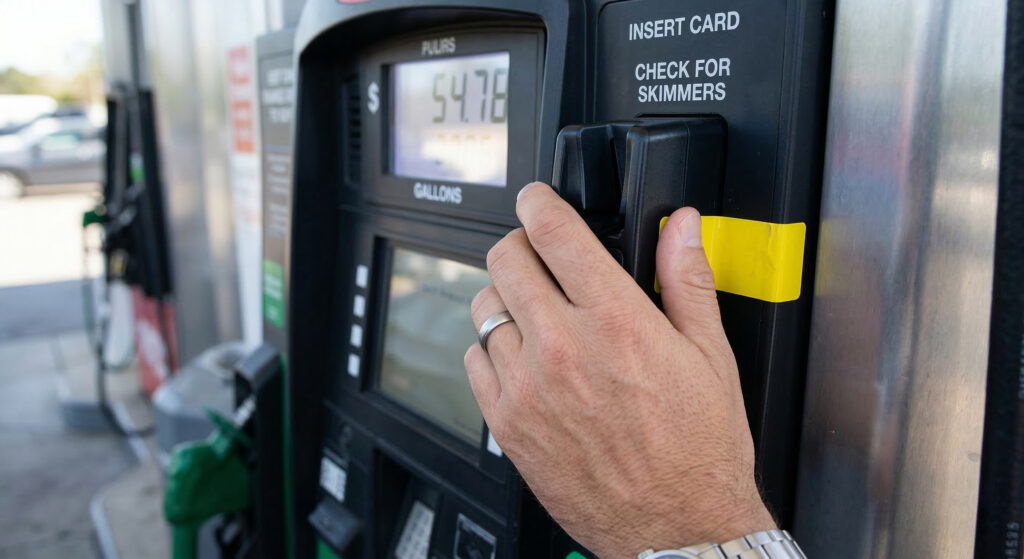
Before inserting a card, conducting a brief visual check is an essential habit for avoiding pump fraud. Start by looking at the card reader security tape. Gas stations commonly place brightly colored, tamper-evident seals across the opening of the card reader panel. If the seal says “void,” is torn, or looks manipulated, the pump may be compromised.
Next, compare the card reader to the adjacent pumps. Fraudulent pump detection often relies on spotting inconsistencies. If the reader on one pump looks noticeably bulkier, features mismatched plastic colors, or lacks an illuminated indicator that is present on the other machines, it could indicate the presence of a skimmer.
Physical Checks for Card Reader Security
Along with visual observations, a quick physical inspection significantly enhances credit card fraud protection. Legitimate card readers are securely bolted and built directly into the fuel machine. Before paying, gently wiggle the card reader slot. A skimmer is typically attached with double-sided tape or weak temporary adhesive so criminals can remove it quickly. If the plastic housing feels loose or shifts upon contact, do not use that terminal.
Additionally, evaluate the keypad. Press the keys to see how they respond. If the keypad feels unusually thick, if the keys are hard to press, or if the panel feels spongey, a fake overlay may be present to capture PIN entries. Physical checks remain one of the most reliable methods for identifying these devices.
Secure Transaction Practices at the Pump
Relying on secure transaction practices adds another crucial layer of defense. Whenever possible, use contactless payment methods such as tap-to-pay cards or mobile wallet applications. These methods transmit a unique, one-time encrypted code rather than raw card data. Many security professionals consider this approach the best credit card fraud protection available at the pump today.
If contactless payment is unavailable, inserting a chip card is typically safer than swiping the magnetic stripe, as the chip creates a dynamic code for the transaction. For those wondering how to protect your debit card from skimmers completely, walking inside the station to pay the attendant directly at the indoor register remains a highly secure alternative.
Utilizing Credit Card Fraud Monitoring
Even with careful inspections, integrating credit card fraud monitoring into daily routines provides a vital safety net. Many financial institutions offer instant push notifications or text alerts for every transaction made on an account. Setting up these alerts helps identify unauthorized charges immediately after they occur.
Active monitoring allows you to catch suspicious activity early. If an unfamiliar charge appears, contacting the financial institution promptly can freeze the account and mitigate potential losses, stopping the progression of the fraud.
Frequently Asked Questions
What exactly is a gas pump skimmer?
A skimmer is an illegal card-reading device placed over or inside a legitimate payment terminal. It is designed to secretly copy your card information and PIN during a standard transaction.
How to protect your debit card from skimmers effectively?
You can protect your information by using contactless payment options, physically wiggling the card slot before inserting your card, avoiding pumps with broken tamper seals, and choosing to pay inside the station when in doubt.
What should I do if I find a skimmer?
If you suspect a pump has been tampered with, do not use it. Notify the gas station attendant immediately so they can shut the pump down and contact local authorities.
Conclusion
Identifying card skimmers on gas station pumps requires a combination of visual awareness, physical checks, and secure payment habits. By taking a few extra seconds to inspect the equipment, wiggling the card reader, and utilizing contactless payment options, drivers can improve their financial fraud prevention strategies and safely manage their daily transactions at the pump.
Disclaimer: The information provided in this article is for educational and informational purposes only. It does not constitute professional advice. Readers should conduct their own research and consult with qualified professionals before making any decisions.