
Guide to Buying Repossessed Storage Sheds
Repo sheds can be a smart buy if you inspect them like a contractor. Learn where repossessed units come from, what fair prices look like, which brands to call, and how to verify paperwork. Use the step-by-step inspection checklist, delivery prep tips, and walk-away rules to avoid costly surprises.
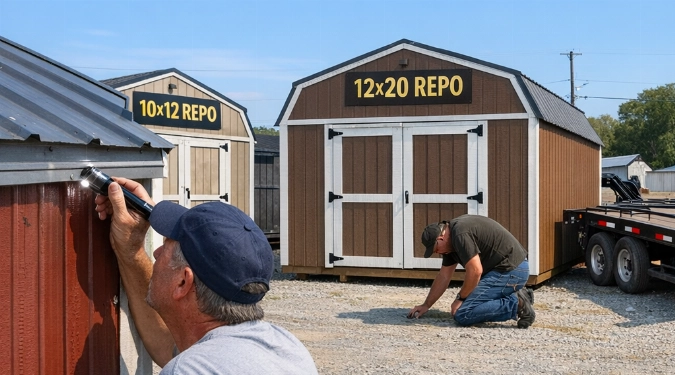
What “Repossessed” Actually Means
A repossessed shed is a financed building that a dealer took back after missed payments. It is usually sold “as-is.” It often has been moved at least once. It may have sat on blocks for months.
Repo listings also include trade-ins and canceled orders. Dealers sometimes label all three as “repo” for attention. Ask which one it is, because risk and price differ.
Where Repo Sheds Come From
Most repo sheds start as rent-to-own contracts. A common setup uses dealers plus financing services like Hearth, Acima, and Progressive Leasing. When a contract fails, the dealer retrieves the unit. The dealer then resells it fast to clear yard space.
Some are former display models. Others are customer returns after storm damage claims. You want the story in one sentence. If the seller cannot explain it, treat it as a red flag.
Where To Find Legit Inventory
Start with manufacturer dealer networks. Call dealers that sell Graceland Portable Buildings, Old Hickory Buildings, Derksen Portable Buildings, Cook Portable Warehouses, Tuff Shed, and Heartland Sheds. Ask for “repo, trade-in, or blem” lists. Many units never get posted online.
Next, search marketplaces with strict filters. Use terms like pre owned repo storage buildings for sale near me. Then filter by “local pickup” and “portable building.” Ask for the serial tag photo before you drive out.
Also check lender remarketing pages and auction houses. Some repos sell through equipment auctions, not shed dealers. Expect fewer details and a harder “as-is” stance.
Realistic Prices And What Drives Them
Most repo sheds price by size, roof style, and interior finish. In many areas, a clean 10×12 repo unit lands around 2,200 to 4,200. A 12×20 often lands around 4,800 to 8,500. Insulation, wiring, and upgrades push the top end.
Transport is the hidden line item. A short local move often runs 300 to 900. Longer or difficult moves can reach 1,200 to 2,500. Site work can add 200 to 1,500 for gravel and leveling.
Inspection Checklist That Catches Money Pits
Structure And Base
- Look for sagging ridge lines and bowed walls. Those hint at frame racking from a bad move.
- Check floor joists at the edge. Probe for soft spots near the door.
- Confirm the skid beams are intact. Split skids make future moves risky.
Roof And Water Paths
- Stand inside and look for daylight at seams. Check for dark staining on rafters.
- Inspect drip edge and roof screws. Missing washers cause slow leaks.
- Smell for mustiness after the unit sits closed. Mold cleanup gets expensive fast.
Doors, Windows, And Security
- Roll-up doors should lift with one hand. Binding can mean the frame shifted.
- On double doors, check the threshold line. Misalignment often means floor swell.
- Verify lock hardware is included. Replacing specialty hasps adds cost.
Electrical And Interior Upgrades
- Ask who installed any wiring. Look for a labeled breaker box and proper staples.
- Check insulation for moisture and pests. Wet batts lose value and hide rot.
- Confirm lofts and shelves are bolted well. Loose add-ons can tear walls in transit.
Paperwork You Should Demand
Ask for a bill of sale with the shed’s serial number. Get a release showing the unit is free of liens. If the seller uses a “repo storage” label, confirm it is truly cleared for resale.
Ask for the original build sheet if available. It confirms wall height, floor thickness, and upgrades. It also helps when you need replacement parts.
Delivery And Site Prep That Prevents Damage
Measure access first. Confirm gate width, overhead wires, and turning radius. A driver can refuse delivery if the path is unsafe. You still may owe a trip fee.
Pick a base that drains. Gravel on geotextile fabric is common. Concrete works too, but it must be level. Ask the mover what they require before you pay.
If you are shopping repo portable buildings, ask if the price includes setup. Some sellers deliver only, then charge extra for leveling and anchoring. Get it in writing.
How To Negotiate Without Playing Games
Use repairs as your leverage, not vague haggling. Price out missing shingles, a new door, or floor patches. Then ask for a specific reduction. Dealers respond well to clean math.
Ask about bundle discounts. Some yards will discount delivery if you take a unit this week. Others will include tie-downs if the shed must leave quickly.
When To Walk Away
Walk if the floor is spongy at multiple corners. Walk if the roof shows widespread staining. Walk if the seller will not provide a serial number photo. Walk if the mover says it cannot be relocated safely.
FAQs
Are repo utility buildings always cheaper than new?
No. Some “repo” units are lightly used but priced close to new due to upgrades. Compare against a new quote with delivery, leveling, and taxes included.
Can I move a repo portable building more than once?
Sometimes, but each move adds stress. Ask the mover to inspect the skids and frame first. Budget for skid repair if the unit is older.
What search terms surface the best local listings?
Try shed repo near me and repo portable buildings near me. Then add size terms like 10×16 or 12×24. Call to verify it is still on the lot.
References
- International Code Council, Residential storage accessory structures guidance
- Manufacturer dealer networks: Tuff Shed, Derksen, Old Hickory, Graceland, Cook Portable Warehouses, Heartland
Disclaimer: The information provided in this article is for educational and informational purposes only. It does not constitute professional advice. Readers should conduct their own research and consult with qualified professionals before making any decisions.