
Factors Making Your Limescale Problem Worse
Scale never shows up once and stops. It creeps from a faint haze to a stubborn toilet ring, cloudy shower glass, and a slow kettle. If your usual cleaners are failing, something is accelerating the buildup. This article is for anyone tired of repeat scrubbing and mystery stains.
Spot the hidden habits and hardware that accelerate scale buildup. Learn what the crust in your toilet, kettle, and shower is made of. Get a tight plan for removal, plus prevention steps that actually stick. You will also know when to stop scrubbing and upgrade your water treatment.
Why “Hard Water” Turns Into Rock
Limescale is mostly calcium carbonate, with magnesium salts mixed in. Heat drives it out of water faster. Evaporation does the same thing on fixtures. Rough surfaces then trap more minerals. That is why buildup speeds up after it starts.
Six Things That Make Buildup Spike
1) Hot Surfaces And Heating Elements: Electric kettles, tank water heaters, and coffee machines concentrate minerals at the hottest spots. A scaled element runs hotter. That creates more scale, faster.
2) Low-Flow Fixtures That Dry Out: Modern showerheads and faucet aerators leave more tiny droplets behind. Those droplets evaporate. Minerals stay and form a gritty film.
3) Leaks That “Wick” Minerals: A running toilet or seeping shutoff valve keeps water moving. That constant wet line feeds deposits. It is a big driver of toilet rings.
4) Alkaline Cleaners Used The Wrong Way: Bleach and many “bathroom cleaners” are not descalers. Some are alkaline. They remove soil but can leave minerals untouched. They can also set stains by stripping organics and exposing the scale.
5) Mixing Products That Neutralize Each Other: Acids dissolve scale. Bases neutralize acids. If you spray vinegar after a foaming bathroom cleaner, you can weaken both. Rinse between steps and keep chemistry simple.
6) Old Porcelain And Etched Chrome: Worn glaze and scratched metal give scale more grip. Abrasive pads speed up that damage. The surface gets harder to keep clean each month.
Removal Plan By Location
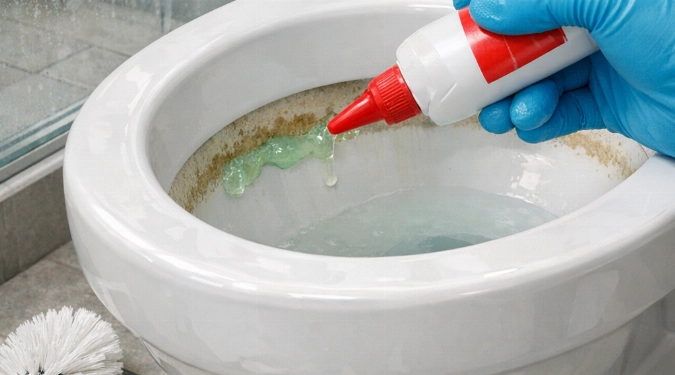
Toilet Bowl Crust And Ring: Common descalers include CLR, Zep Calcium Lime & Rust Remover, Lime-A-Way, Bar Keepers Friend, Ecozone, and CitriSurf. Always check label compatibility and ventilation notes. Never mix acids with bleach.
Bad Buildup Under The Rim: Deposits hide under the rim jets. Soak paper towels in descaler and press them under the rim. Let it sit, then scrub. This is the detail most people miss when figuring out how to get rid of bad limescale in toilet.
Shower Glass And Tile Film: Use a dedicated scale remover, not soap scum spray. Work in small sections. Rinse fully. Then squeegee daily. That is the simplest path for how to get rid of bathroom scale.
Kettles And Small Appliances: Fill with a descaling solution or diluted acid per the product label. Heat if allowed, then soak. Rinse twice and boil plain water once. This answers how to get rid of limescale kettle without leaving tastes behind.
Prevention That Actually Reduces Scale
Fix leaks first. Then reduce mineral load. For a home, that usually means a water softener or a template assisted crystallization unit. For facilities, it can mean an industrial descaling system paired with filtration and monitoring. Also change how surfaces dry. Keep a squeegee in the shower.
Wastewater Hardness And Why It Matters
Commercial sites also fight scale downstream. Hardness removal from wastewater can protect pipes, spray nozzles, and heat exchangers. Common methods include lime softening, ion exchange, and membrane systems like nanofiltration. The best choice depends on flow, discharge limits, and sludge handling.
Frequently Asked Questions
What is the best way to remove tough limescale? For tough, built-up limescale, acidic cleaners are the most effective. You don’t need expensive chemicals. White vinegar or lemon juice are excellent options.
Can limescale damage my pipes and appliances? Yes, absolutely. Over time, severe limescale buildup can restrict water flow in pipes, leading to clogs and reduced pressure.
Disclaimer: The information provided in this article is for educational and informational purposes only. It does not constitute professional advice. Readers should conduct their own research and consult with qualified professionals before making any decisions.