
Everything You Need to Know About Crohn’s Disease – Diagnosis, Treatment and More
Persistent diarrhea, belly pain, or weight loss can leave you guessing about what’s going on and what to do next. Crohn’s can look like infection or IBS at first, and delays are common. This article is for anyone facing new symptoms, confusing labs, or an upcoming GI workup.
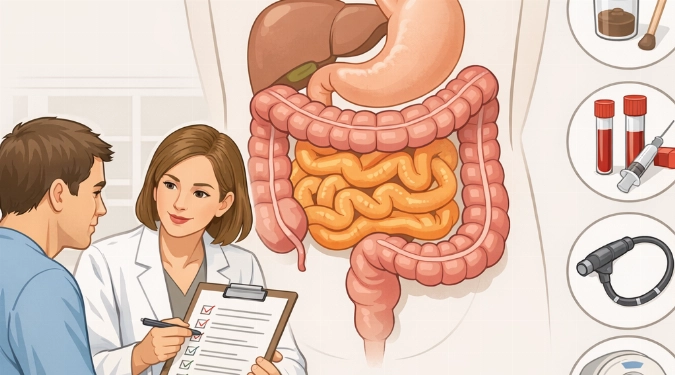
Learn how Crohn’s is diagnosed, what tests to expect, and which results matter. This guide maps treatment options from diet support to advanced biologics. You’ll also get a practical flare plan, plus questions to bring to your next GI visit.
Signs That Should Prompt A GI Visit
Crohn’s can start with gut symptoms or body-wide clues. Patterns matter more than one bad day. Track what is new, persistent, or worsening.
- Ongoing diarrhea, especially at night.
- Crampy abdominal pain, often in the lower right.
- Unintended weight loss or low appetite.
- Blood in stool or black, tarry stool.
- Fatigue that does not match your sleep.
- Mouth sores, joint pain, or red, painful eye symptoms.
- Skin bumps on shins, or draining sores near the anus.
Bring a two-week log to your visit. Note stool frequency, urgency, fevers, foods, and any NSAID use.
What Clinicians Must Rule Out First
Many conditions can mimic Crohn’s. Ruling them out avoids the wrong treatment.
- Infections, including C. difficile and Giardia.
- Celiac disease and lactose intolerance.
- Irritable bowel syndrome with diarrhea.
- Ischemic or microscopic colitis.
- Medication injury from NSAIDs.
Your clinician may order stool cultures and a multiplex PCR stool panel. They may also check celiac blood tests and basic labs.
How Crohn’s Disease Diagnosis Usually Happens
Most people need a mix of labs, imaging, and endoscopy. No single test is enough. The goal is to prove inflammation and define its location.
Blood And Stool Tests
Common blood tests include CBC, CRP, and ESR. They look for anemia and inflammation. A CMP can flag dehydration or liver issues.
Stool calprotectin and stool lactoferrin help separate inflammatory disease from IBS. They also help track response over time.
Scopes And Biopsies
Colonoscopy with ileoscopy is the core test. Biopsies can show chronic inflammation and granulomas in some cases.
An upper endoscopy may be added if symptoms suggest upper GI disease. A capsule endoscopy can evaluate small bowel areas not reached by scopes.
Imaging That Maps Extent
CT enterography and MR enterography show small bowel inflammation, strictures, and abscesses. MR is often preferred for repeat imaging. Pelvic MRI helps evaluate perianal fistulas.
Novel Biomarkers That May Help Soon
Research on Novel Biomarkers for the Diagnosis of Inflammatory Bowel Disease is moving fast. Some tools are already used in specialty care. Others remain research-only.
- Serologic panels, including ASCA and pANCA, which can support context but do not confirm disease.
- Multi-omics stool signatures that combine microbes and metabolites.
- Blood gene expression and cytokine patterns to predict severity.
- Therapeutic drug monitoring to interpret biologic levels and antibodies.
Ask your GI which tests change decisions in your case. Many biomarker panels add cost without clear benefit.
Treatment Options, From Basics To Advanced
Treatment aims for symptom control and mucosal healing. Plans depend on location, severity, and complications. Many people need long-term maintenance therapy.
- 5-ASA drugs are used less often for Crohn’s than for ulcerative colitis.
- Corticosteroids can calm a flare but are not ideal long term.
- Immunomodulators may help with maintenance in selected cases.
- Biologics include anti-TNF agents, anti-integrins, and IL-12/23 pathway drugs.
- Small molecules include JAK inhibitors and S1P modulators for specific situations.
Supportive care matters too. It can include iron infusions, B12 replacement, vitamin D, and bone protection if steroids are used.
Food And Nutrition Without Guesswork
No single diet treats everyone. Use food as a tool, not a test of willpower. Aim for fewer triggers and better nutrition.
- During flares, some people tolerate low fiber and low residue meals.
- If strictures are present, ask about avoiding high-risk roughage like popcorn and raw cabbage.
- Consider lactose reduction if dairy worsens symptoms.
- Ask about partial enteral nutrition if weight loss is severe.
Request a referral to a GI dietitian. Bring your food log and lab results.
A Practical Flare Plan You Can Use
Build a plan before symptoms spike. Put it in your phone notes.
- Know which symptoms mean urgent care, including dehydration, high fever, severe pain, or persistent vomiting.
- Keep your last calprotectin and CRP values saved.
- List your meds, prior surgeries, and drug allergies.
- Ask your GI which stool tests to do before starting steroids.
- Have a plan for hydration and electrolytes.
Questions To Ask At Your Next Visit
- Where is my inflammation located, and how severe is it?
- What is our target, symptoms only or endoscopic healing?
- Which monitoring schedule do you use for labs and calprotectin?
- Do I need vaccines updated before immunosuppressive therapy?
- How will we screen for colon cancer if my colon is involved?
Bring up Crohn’s Disease Symptoms that happen outside the gut. They can change treatment choices.
FAQs
What does “remission” mean in modern care?
It can mean symptom control, normal inflammatory markers, or healed lining on scope. Many clinics use a treat-to-target approach with objective markers.
How do I know if my medicine is losing effect?
Clues include returning urgency, rising calprotectin, or new anemia. Your clinician may use trough levels and anti-drug antibody testing to guide next steps.
Are vaccines safe if I’m on immune-suppressing therapy?
Many routine vaccines are allowed, including inactivated flu and pneumococcal vaccines. Live vaccines may be restricted. Ask for a vaccine review before starting new therapy.
How often do people need surgery?
Surgery can be needed for strictures, fistulas, or abscesses. It can improve quality of life, but it does not cure Crohn’s. Maintenance therapy may still be recommended.
What should I bring to speed up a first appointment?
Bring prior CT or MRI reports, colonoscopy photos, pathology results, and a medication timeline. Also list family history of IBD and autoimmune disease.
References
- National Institute of Diabetes and Digestive and Kidney Diseases (NIDDK).
- Centers for Disease Control and Prevention (CDC).
- Crohn’s & Colitis Foundation.
- American College of Gastroenterology (ACG) clinical guidance.
- American Gastroenterological Association (AGA) clinical updates.
Disclaimer: The information provided in this article is for educational and informational purposes only. It does not constitute professional advice. Readers should conduct their own research and consult with qualified professionals before making any decisions.