Different Welding Machines, Different Applications: Quick Overview
Trying to choose a welder usually turns into a mess of acronyms, amps, and conflicting advice. You might be fixing a gate, building a trailer, or learning in your garage. This article helps you sort MIG, TIG, stick, and multiprocess options so you do not overspend.
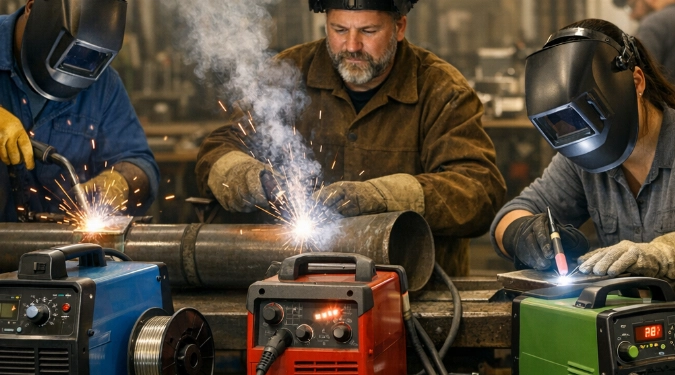
Pick a welder that matches your metal, power outlet, and skill level. This guide maps common machine types to real jobs like auto panels or farm repairs. You will also learn what specs to check, what accessories matter, and which safety gear to never skip.
Match The Process To The Job
MIG is the fast path for clean steel fabrication and repeatable welds. It shines on brackets, tubing, and trailer repairs. TIG is slower but precise. It fits thin stainless, aluminum, and visible joints.
Stick welding is the workhorse for dirty or rusty steel. It tolerates wind better than MIG. Flux-core MIG splits the difference. It helps outdoors when shielding gas blows away.
Plasma cutters are not welders, but they pair well with any setup. They speed up fit-up and reduce grinding. Oxy-fuel works too, but it adds heat distortion on thin sheet.
Machine Types You Will Actually See
Transformer Vs Inverter
A transformer welder is heavy and simple. It can last for decades with basic care. An inverter welding machine is lighter and often smoother on thin material. It also supports features like hot start and arc force.
Multiprocess Setups
Many units combine MIG, TIG, and stick modes. They are handy for small shops with varied work. Check whether TIG is lift-arc only or supports a foot pedal and HF start. That detail changes how usable TIG feels.
Spool Guns And Push-Pull
Aluminum MIG often needs a spool gun or push-pull torch. A standard torch can birdnest soft wire. Verify the machine lists spool-gun compatibility. Also check amperage at 100% duty cycle for long beads.
Fast Picks By Application
- Auto body and thin sheet: 120V MIG with solid wire and gas, plus good heat control.
- Gates and rails: 240V MIG for speed, or stick if steel is weathered.
- Stainless kitchen work: AC/DC TIG with a pedal for smooth starts.
- Aluminum frames: AC TIG, or MIG with a spool gun for production.
- Field repairs: engine-driven stick, or a rugged inverter with a generator rating.
If you need a welding machine for home use, focus on outlet limits and noise. A 120V unit can be great for 1/8 in steel. Thick plate work usually needs 240V. Read the manual’s input amperage before you trip breakers.
Specs That Tell The Truth
Amperage range matters less than control at the low end. Thin metal needs stable arcs under 40 amps. Duty cycle is the other limiter. A 20% duty cycle at 150 amps means two minutes welding per ten.
Look for clear wire-feed ranges and drive-roll types. Cast-aluminum drives grip better than plastic. For arc welding equipment, check if it runs 6010 rods. Some inverters struggle with that cellulosic rod.
Portability Without Regret
A portable welding machine should be sized by where it travels. Lifting into a truck bed is different than rolling around a garage. Check handle placement and case strength. Also confirm it is rated for generator power if you run off a jobsite unit.
Tools And Accessories That Save Hours
Budget for welding tools and accessories early. A good auto-darkening helmet, extra tips, and a chipping hammer are basics. Add a set of Vise-Grip clamps, magnetic squares, and a decent grinder. A gas bottle cart keeps hoses from getting crushed.
For MIG, keep contact tips, nozzles, and liner sizes on hand. For TIG, stock cups, collets, tungstens, and a flowmeter. Anti-spatter and nozzle gel reduce cleanup. A simple fillet gauge helps you hit consistent weld size.
Safety Gear That Is Not Optional
Welding safety equipment starts with eye and lung protection. Use a helmet with the correct shade range. Wear a respirator rated for welding fumes when ventilation is limited. Gloves, leathers, and closed-toe boots prevent burns.
Add ear protection for grinding and air arcs. Keep a fire extinguisher rated for ABC fires within reach. A welding curtain protects bystanders from arc flash.
Brand Models Worth Comparing
For common shortlists, compare Miller, Lincoln Electric, ESAB, Hobart, Everlast, and YesWelder. Check parts availability for torches and consumables. Also check warranty terms for inverters. Some brands require proof of periodic maintenance.
What You Will Pay And Why It Varies
Entry 120V MIG units often run $250 to $650. Midrange 240V multiprocess inverters often land at $800 to $1,800. Shop-grade packages with strong duty cycles can reach $2,500 to $6,000.
Consumables and gas add up fast. Plan $150 to $400 for a helmet, gloves, clamps, and grinders. A filled cylinder and regulator often add $250 to $600. The best welding machine price is the one that meets duty cycle and local service support.
When To Call A Pro
Some work needs certified procedures and liability coverage. Structural beams, pressure piping, and critical trailer hitches are common examples. In those cases, professional welding services can be cheaper than rework. Ask what process they will use and what filler metal they specify.
References
- American Welding Society (AWS), safety and process resources
- OSHA, welding and cutting safety guidance
- Manufacturer manuals for Miller, Lincoln Electric, ESAB, Hobart, Everlast, YesWelder
Disclaimer: The information provided in this article is for educational and informational purposes only. It does not constitute professional advice. Readers should conduct their own research and consult with qualified professionals before making any decisions.