Creative DIY Project Ideas: Where to Begin
You’ve saved ideas, bought supplies, and still don’t know what to start. The hardest part is picking a project that fits your space, budget, and patience. This article is for anyone who wants a first DIY win that looks intentional, not like a half-finished experiment from a weekend spiral.
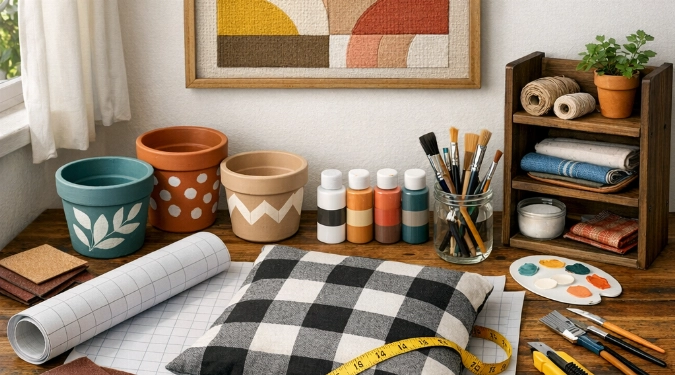
Pick a first project that fits your space, time, and tools. Learn a simple way to choose materials, plan steps, and finish clean. This guide gives five starter projects with exact supply lists and realistic time ranges. You’ll also learn how to avoid the mistakes that make DIY feel hard.
Start With Three Quick Choices
Space, Time, Skill
Choose where the finished piece will live. Pick one surface or one corner. Set a time box you can keep. Aim for 30 to 90 minutes for a first win.
Pick one “new” skill only. Examples include sanding, hot gluing, or basic measuring. Avoid projects that require cutting perfect circles or tight upholstery.
A Simple Formula For Picking Materials
Use One Base, One Accent
Start with one base material like wood, fabric, or glass. Add one accent like paint, stain, or vinyl. Keep the color palette to two colors plus a neutral.
For small decor, basswood and poplar are easy to work. For fabric, cotton canvas forgives mistakes. For paint, choose water-based acrylic for faster cleanup.
DIY Tools You’ll Actually Use
Build A Starter Kit
Skip the massive tool haul. A small, reliable set beats a drawer of flimsy gadgets. A good starter kit usually lands between $35 and $90.
- Measuring tape and a small speed square.
- Utility knife with spare blades.
- 8-inch scissors and a self-healing cutting mat.
- Hot glue gun with mini sticks.
- Sandpaper in 120 and 220 grit.
- Paint brush set plus a 4-inch foam roller.
Helpful brands for basics include Fiskars, X-Acto, Gorilla Glue, 3M, Rust-Oleum, and Minwax. Add a simple clamp set later if you work with wood.
Five First Projects With Exact Supply Lists
1) Framed Fabric Wall Art
Time: 30 to 60 minutes. This is clean, fast, and forgiving. It is great for DIY Projects For Home Decor.
- Two thrifted frames.
- Quilter’s cotton or canvas.
- Staple gun or strong double-sided tape.
Iron the fabric first. Wrap it like a present around the backing. Staple or tape on the back, then reassemble.
2) Peel-And-Stick Drawer Liners
Time: 45 to 90 minutes. The payoff feels big for little effort. This counts as Craft Supplies For Creative Work you will keep using.
- Peel-and-stick shelf liner or removable wallpaper.
- Ruler and utility knife.
Cut pieces 1/8 inch smaller than each drawer. Smooth from the center outward. Pierce bubbles with a pin, then press flat.
3) Painted Terra-Cotta Planter Set
Time: 60 to 90 minutes plus dry time. You practice clean lines without high stakes. This fits Creative Craft Ideas For Beginners.
- Three small terra-cotta pots.
- Acrylic paint and painter’s tape.
- Clear water-based sealer.
Seal first if you want crisp paint edges. Tape simple stripes or blocks. Seal again after paint dries.
4) No-Sew Pillow Cover
Time: 45 to 75 minutes. You get a “soft win” without a machine. Use it for Handmade Craft Projects And Ideas.
- 1 yard of fabric.
- Iron-on hem tape.
- Iron and pillow insert.
Make an envelope back. Iron tape along the seams. Press slowly and follow the tape instructions for heat and time.
5) Stained Mini Floating Shelf
Time: 90 minutes plus dry time. This adds one light woodworking step. It also teaches cleaner finishing using DIY Tools And Craft Materials.
- One 1×6 board cut to 18 inches.
- Sandpaper, stain, and clear coat.
- Two L-brackets and screws.
Sand with 120 then 220. Wipe dust with a damp cloth. Stain, wipe excess, then seal after it dries.
Where To Find Good Supplies Without Overbuying
Check thrift stores for frames, jars, and baskets. Look for “offcuts” at hardware stores for small wood pieces. Use craft store coupons for basics like brushes and tape.
Keep a small bin for leftovers. Save ribbon, twine, and sample paint. Label it so you stop buying the same thing twice.
Three Mistakes That Ruin A First Project
- Skipping surface prep. A two-minute wipe prevents peeling paint.
- Rushing dry time. Tackiness causes fingerprints and dents.
- Changing the plan mid-build. Finish the simple version first.
FAQ
How Do I Choose A Project If I Hate Measuring?
Pick projects with flexible sizing. Fabric wall art and planters work well. For shelves, ask for cuts at the store and only measure placement.
What’s The Best Way To Store Paint And Glue?
Store paint at stable room temperature and wipe the rim before closing. Store glue sticks in a sealed bag. Keep everything in a shallow bin so you see it.
How Do I Fix Brush Marks On Small Decor?
Use a foam roller for flat areas. Thin acrylic paint with a few drops of water. Apply two light coats instead of one heavy coat.
Disclaimer: The information provided in this article is for educational and informational purposes only. It does not constitute professional advice. Readers should conduct their own research and consult with qualified professionals before making any decisions.