Complete Guide to Home Depot HVAC Installation Costs
You may have a Home Depot estimate that looks simple until add-ons appear. Permits, duct fixes, and electrical updates can change the total fast. It also gets hard to compare one package to another. This article is for homeowners who want clear price ranges and a clean way to judge quotes before signing.
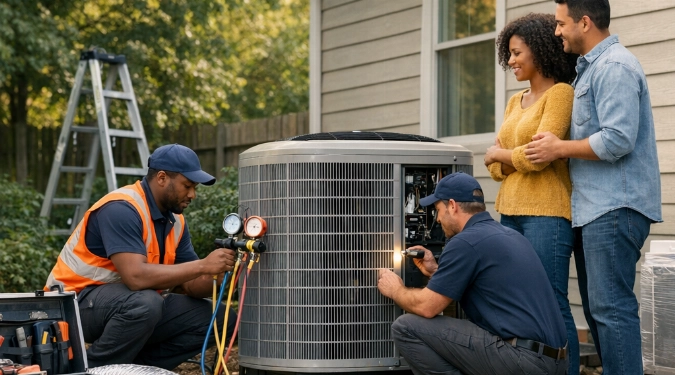
See typical Home Depot HVAC install costs by system type and efficiency. Learn which quote items raise the price most. Use the checklists to compare bids, cut surprise fees, and confirm what you are buying.
How Home Depot HVAC Installation Usually Works
Home Depot often handles the sale and scheduling. A local licensed contractor usually does the work. The contractor may not be a Home Depot employee. Your contract may name both parties.
Ask for the installer company name before you agree to anything. Ask who will pull the permit. Ask who provides the labor warranty.
Home Depot HVAC Installation Cost Ranges
Prices vary by system type and job difficulty. These ranges fit many standard replacements with normal access. They do not include big duct rebuilds or major electrical upgrades.
- Central AC install: $6,500 to $11,500.
- Gas furnace install: $4,800 to $9,800.
- AC plus furnace bundle: $10,800 to $19,800.
- Heat pump with air handler: $11,500 to $22,000.
- Ductless mini-split single zone: $4,300 to $8,200.
- Ductless mini-split multi-zone (2–4 heads): $9,500 to $19,500.
Many quotes change after the in-home visit. That is when the installer sees the line set, drain, and electrical setup. These details can shift the hvac installation cost quickly.
What Changes The Total The Most
System Size And Efficiency
Bigger systems cost more. Higher efficiency also costs more. Moving from base to high efficiency often adds $1,200 to $3,800.
Access And Labor Time
Attics and crawlspaces increase labor. Tight closets can add time too. Long refrigerant runs can raise cost.
Permits And Code Items
Permits often cost $150 to $700. Code items can include safety switches and drain changes. Ask for these as separate lines.
Common Add-Ons And Typical Costs
Some add-ons are useful. Some are not needed. Ask what problem each add-on solves.
- Thermostat upgrade: $150 to $650.
- Surge protection: $250 to $650.
- Media filter cabinet: $250 to $800.
- UV light: $400 to $1,250.
- Condensate pump or drain redo: $200 to $700.
- New pad or stand: $150 to $900.
Ductwork Costs To Watch For
Ductwork is a big reason quotes do not match. A basic replacement assumes the ducts are fine. If airflow is poor, the installer may suggest changes.
- Duct sealing: $600 to $2,400.
- Return air upgrade: $900 to $3,800.
- Partial duct replacement: $1,800 to $5,500.
- Full duct replacement: $5,500 to $14,000.
Ask what static pressure is now. Ask what it should be after the job. This helps you judge if the scope is real.
Brands You May See In Quotes
Brand options depend on the installer. Quotes often feature Carrier, Trane, Lennox, Rheem, Goodman, and York. Ask for the exact model numbers. Ask for the AHRI match number too.
How To Compare Bids The Right Way
Use this list to compare hvac system prices and scope.
- Model numbers for the indoor and outdoor units.
- Efficiency ratings listed in writing.
- Line set plan stated clearly.
- Permit and inspection included.
- Electrical and drain work listed as lines.
- Startup steps listed, not just “start and test.”
- Labor warranty term and who handles claims.
This list also helps when you check hvac prices from other contractors. It reduces guesswork and protects you from vague quotes.
Questions To Ask During The Visit
- Will you do a Manual J, or another load method?
- Will you replace the refrigerant line set?
- How will you confirm airflow after install?
- How will you confirm refrigerant charge?
- What happens if the inspection fails?
FAQs
Is The Cost Of New HVAC System Installed Always A Single Number?
No. Some quotes include permits and disposal. Others list them later. Ask for a final price with all required items included.
What Makes HVAC System Installation Cost Jump After The Quote?
Line sets, duct issues, and electrical upgrades are common causes. Ask for photos and itemized change orders. Do not accept vague “misc materials” charges.
Is A Full HVAC Replacement Always Better Than A Partial Swap?
Not always. Mixing old and new parts can reduce efficiency. It can also limit warranty coverage. Ask how the match affects performance and warranty.
What Should I Bring Up If I Need Heating And Cooling Improvements?
Describe comfort issues by room and time of day. Mention hot upstairs areas and weak airflow. Ask if the fix is ductwork, zoning, or equipment sizing.
Disclaimer: The information provided in this article is for educational and informational purposes only. It does not constitute professional advice. Readers should conduct their own research and consult with qualified professionals before making any decisions.