
Best Options for Itchy Skin Creams
Itchy skin can come from eczema, hives, dryness, nerve irritation, or even a new medication. The wrong cream wastes time and can make burning or breakouts worse. You may also be trying to use retinol or other actives and need a plan that calms itch without wrecking your barrier.
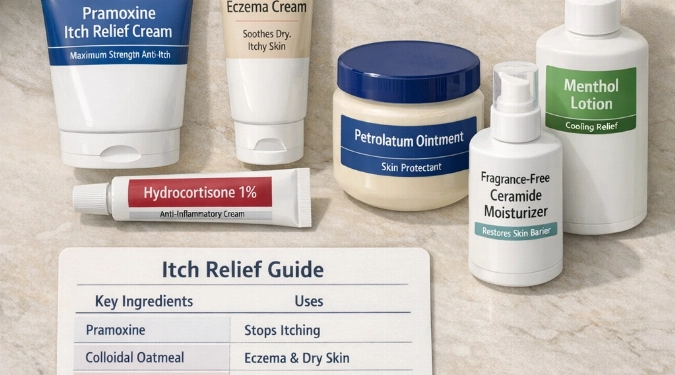
Pick an itch cream by matching the cause to the active ingredient. Learn when to use steroids, anesthetics, antihistamines, or barrier creams. This guide also shows safe layering with actives, what to avoid on face skin, and when itching needs a clinician’s help, fast.
Match The Itch To The Active
Inflammation Itch: Red, hot, swollen patches often respond to anti-inflammatory creams. The common over-the-counter option is 1% hydrocortisone. Use a thin layer and follow label timing. Avoid long use on thin skin areas.
Dryness And Barrier Damage: Tight, flaky, “paper cut” skin needs barrier repair first. Look for ceramides, glycerin, petrolatum, and dimethicone. These reduce water loss and calm itch over days, not minutes.
Nerve-Driven Itch: Burning, zapping, or itch without much rash can be neuropathic. People often ask what ingredient stops nerve-related itching. Pramoxine is a solid first try. Menthol can distract nerves too, but it may sting on cracked skin.
Hives And Histamine: Raised, migrating welts are often histamine-driven. Many wonder does lidocaine cream work for hives. It may numb, but it does not address the histamine release. Oral antihistamines are commonly used, but ask a clinician for persistent hives.
Hydrocortisone, Oatmeal, And Other Nonsteroid Options
For hydrocortisone vs colloidal oatmeal for itching, think “inflammation control” versus “soothing and barrier support.” Hydrocortisone can reduce redness and swelling quickly. Colloidal oatmeal supports the barrier and calms stingy dryness. It is a good daily option.
If you want natural alternatives to cortisone cream for skin, consider colloidal oatmeal, sunflower seed oil, and shea butter. Licorice root extract is also used in some products for redness. Patch test, since “natural” can still irritate.
Six Specific Cream Picks And What They Do Best
- CeraVe Itch Relief Moisturizing Cream: pramoxine plus ceramides for itch with dryness.
- Eucerin Eczema Relief Cream: colloidal oatmeal for flare-prone, rough patches.
- Vanicream Moisturizing Cream: simple formula for sensitive, reactive skin.
- Aveeno Eczema Therapy Daily Moisturizing Cream: colloidal oatmeal with a lighter feel.
- Sarna Original Lotion: menthol and camphor for rapid “cooling” distraction itch relief.
- Aquaphor Healing Ointment: petrolatum barrier for cracked, chapped zones.
For cerave vs eucerin for eczema flare ups, pick CeraVe if you want pramoxine plus ceramides. Pick Eucerin if oatmeal soothing is your priority. Many people keep both and alternate by symptom.
Face And Acne-Prone Areas Need A Different Texture
The best non-comedogenic cream for itchy face is usually a light, fragrance-free moisturizer. Look for “non-comedogenic” on the label, plus ceramides and niacinamide. CeraVe PM Facial Moisturizing Lotion is a common choice. La Roche-Posay Toleriane Double Repair is another.
Retinol Layering Without Making It Worse
If you’re asking can you use anti itch cream with retinol, the answer depends on the active. Barrier creams and bland moisturizers usually layer well. Apply moisturizer first, then retinol, then moisturizer again if you are dry. Avoid menthol, camphor, and acids on the same night if you sting.
When Steroid Creams Become A Problem
People worry about long term side effects of steroid creams for good reason. Overuse can thin skin and increase bruising. It can also trigger acne-like bumps and visible blood vessels.
Itching Triggered By A New Drug
For cream for itchy skin caused by medication, focus on symptom relief while you contact the prescriber. Use a bland barrier cream plus a pramoxine lotion. Stop any new fragranced product until you sort the cause.
References
- American Academy of Dermatology: Guidance on itch, eczema care, and topical steroid use.
- National Eczema Association: Moisturizer and trigger education.
- FDA OTC Drug Facts labeling: Hydrocortisone, pramoxine, and topical anesthetic directions.
Disclaimer: The information provided in this article is for educational and informational purposes only. It does not constitute professional advice. Readers should conduct their own research and consult with qualified professionals before making any decisions.