Benefits, Types And Safety Of Dermal Fillers for Seniors
Considering dermal fillers later in life can feel risky. You may worry about swelling, bruising, looking overfilled, or choosing the wrong product. Pricing promos add confusion, and some medical issues change what’s safe. This article is for seniors who want clear options before booking a consult.
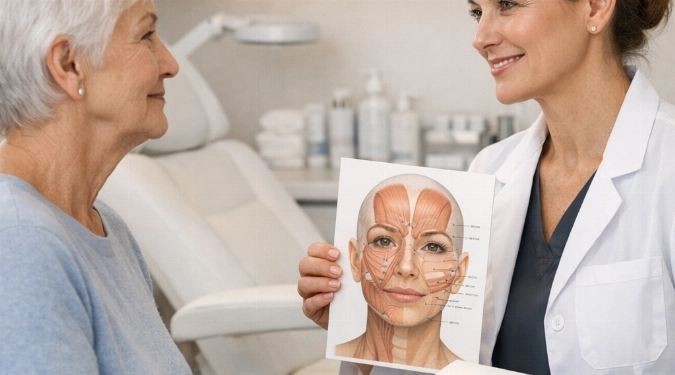
Know which filler matches which goal, and what “natural” should look like on older skin. Learn the six main filler families, plus brand examples, and what they cost. Use the safety checklist to vet an injector, spot red flags, and plan timing around dental work, meds, and travel.
What Older Skin Needs From A Filler
Aging changes more than wrinkles. Fat pads shift, bone support thins, and skin gets drier. That is why “line chasing” can look puffy on mature faces. The best plans rebuild structure first. Then they soften folds and improve hydration.
Common senior goals are cheek support, lip definition without bulk, softer marionette lines, and hand volume. Another goal is restoring a rested look around the mouth and chin. Good results should preserve expression.
Six Filler Types You’ll Hear In Consults
Hyaluronic Acid
HA fillers add volume and can be dissolved with hyaluronidase. Brands include Juvéderm Ultra, Juvéderm Voluma, Restylane Lyft, Restylane Kysse, Belotero Balance, and Revanesse Versa. HA is often used for lips, tear troughs, and folds.
Calcium Hydroxylapatite
Radiesse gives firmer support and can stimulate collagen over time. It is used for jawline, cheeks, and hands. It is not typically a first choice for very thin skin under eyes.
Poly-L-Lactic Acid
Sculptra builds collagen gradually across weeks. It is a series approach, not an instant “fill.” It can suit broader hollowing in temples and midface.
PMMA Microspheres
Bellafill is longer lasting because it leaves microspheres behind. It is less forgiving if placement is wrong. Many clinicians reserve it for select patients after trying reversible options.
Autologous Fat Transfer
Fat grafting uses your own tissue and requires a minor harvest. Results can be long lasting, but take-rate varies. Swelling can last longer than with syringes.
Collagen Biostimulators
Newer options like Renuva act as a scaffold for your own fat-like tissue. These are not the same as HA gel fillers. Ask what product family you are getting, and why.
What Results Can Realistically Look Like
For seniors, the best wins are often subtle. Think lifted cheeks that reduce nasolabial depth. Think a smoother chin that softens a “pebble” texture.
Ask for “support, not puff.” A skilled injector may use small amounts across several visits. That approach can lower swelling risk and avoid overfilling.
Safety Checks That Matter More After 60
- Vascular risk awareness: Fillers can block a vessel. Ask how they reduce this risk and what emergency plan they follow.
- Product verification: Ask to see the sealed box and lot number sticker. Counterfeit products exist.
- Medical review: Bring a list of meds and supplements. Mention blood thinners, aspirin use, and fish oil.
- Dental timing: Schedule filler at least two weeks away from major dental work when possible. Tell your injector if implants or extractions are planned.
- Skin quality: Very thin skin may need softer HA or collagen-building options. Overly firm fillers can show edges.
- Infection precautions: Cold sores history matters for lip injections. Ask what their protocol is for flare prevention.
What You’ll Pay And What “Specials” Usually Mean
Most HA fillers are priced per syringe. Typical ranges are $600 to $950 per syringe. Premium structural fillers can run $750 to $1,150 per syringe.
Biostimulators often price per vial. Sculptra is commonly $800 to $1,400 per vial. Radiesse often falls around $700 to $1,100 per syringe.
Packages and promotions vary by clinic and season. “Juvederm Voluma Specials Near Me” usually signals a limited-time discount, not a different product. Ask how many syringes are included and which areas count.
How To Choose A Provider Without Guesswork
- Prioritize board-certified dermatology or plastic surgery, or a highly supervised injector team.
- Ask how often they treat older faces. Request before-and-after photos for your decade and concern.
- Ask what they do if there is blanching, severe pain, or vision symptoms. They should name hyaluronidase and escalation steps.
- Look for conservative planning. Beware “full face in one visit” pressure.
If you are searching “dermal fillers near me,” call two offices. Ask who injects, what brands they stock, and how they handle complications.
Smart Timing For Events And Recovery
Plan fillers at least two weeks before a big event. Bruising can last seven to 14 days. Swelling is often worst in the first 48 hours.
Avoid alcohol and heavy workouts for 24 hours if your clinician agrees. Skip facial massages unless you are told otherwise. Call promptly for increasing pain, mottled color changes, or fever.
FAQs Seniors Ask That Clinics Don’t Always Answer
- Can fillers help “tech neck” lines? Sometimes, but treatment may combine skin tightening and small HA. Deep horizontal bands can be stubborn.
- Do fillers worsen jowls? Poor cheek support can. Strategic midface support may reduce downward pull. Overfilling lower face can add heaviness.
- What about combining tox and filler? Some people pair neuromodulators with filler to reduce motion-related creasing. Search terms like “Botox 3 areas for 150 near me” reflect promos, but ask dosing details.
- How do I confirm I’m getting the right Juvéderm? Ask for the exact name, like Voluma or Ultra. “Juvederm Near Me” searches are common, but the specific formulation matters most.
- Is a bundle worth it? It can be, if it matches your plan. “Juvederm Doctor Near Me ($150 Full Package)” should be clarified, since fillers rarely cost that little.
References
- American Society of Plastic Surgeons (ASPS): Dermal fillers patient safety information
- American Academy of Dermatology (AAD): Cosmetic injectables guidance
- FDA: Dermal filler approvals and safety communications
Disclaimer: The information provided in this article is for educational and informational purposes only. It does not constitute professional advice. Readers should conduct their own research and consult with qualified professionals before making any decisions.