
An Overview of Classic Army Surplus Jeeps
Classic army surplus jeeps are among the most recognizable military vehicles ever produced. Known for their rugged simplicity and unmatched versatility, these military surplus jeeps were originally designed for wartime service but later found lasting roles in civilian life. This overview explains where these vehicles came from, the design characteristics that define them, and why they remain important both as historical artifacts and functional off-road utility vehicles in the United States.
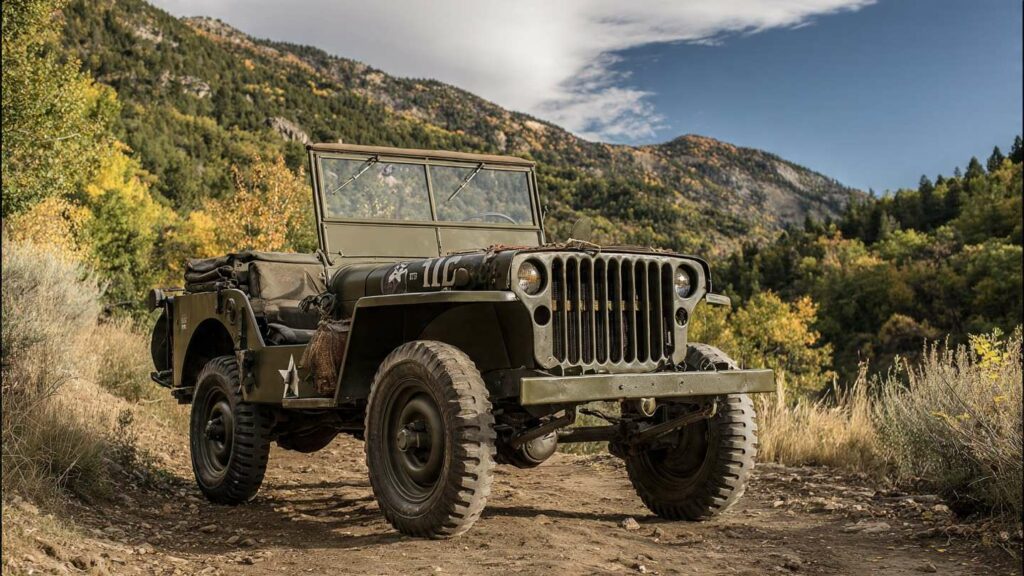
The Birth of the Military Jeep
The military jeep originated during World War II, when the U.S. Army required a lightweight, four-wheel-drive reconnaissance vehicle capable of handling harsh battlefield conditions. After early prototypes, Willys-Overland and Ford mass-produced what would become the most iconic military jeep in history.
Over 600,000 units were built during WWII alone. When the war ended, many were released into civilian hands as surplus vehicles, launching decades of non-military use and preservation. Key historical military jeep models include:
- Willys MB (WWII): The original production jeep with a simple ladder frame and the “Go-Devil” four-cylinder engine
- Ford GPW (WWII): Nearly identical to the MB, distinguished by a stamped grille
- Willys M38 (Korean War era): Strengthened frame, improved suspension, and 24-volt waterproof electrics
- M151 MUTT (Vietnam era): A major redesign with unibody construction and independent suspension
Unmistakable Jeep Design Characteristics
Military jeep design prioritized function above all else. Every feature served a tactical or maintenance purpose. Defining exterior and structural features:
- Flat steel body panels for easy repair
- Bolt-on steel tub mounted to a ladder frame
- Side-mounted shovel and axe for field utility
- Rear-mounted full-size spare tire
- Heavy-duty rear pintle hook for towing
The exception was the M151 MUTT, which used unibody construction instead of a traditional frame.
The Fold-Down Windshield
One of the most iconic features of classic army surplus jeeps is the hinged windshield. This design allowed the windshield to fold flat onto the hood. Reasons for the fold-down windshield:
- Lowered vehicle profile for concealment
- Easier transport by aircraft or ship
- Improved weapon operation visibility
A Spartan, Purpose-Built Interior
Inside, military jeeps were stripped to the essentials. Comfort was secondary to durability and ease of cleaning. Interior characteristics included:
- Minimal dashboard gauges (speed, fuel, oil, temperature)
- Canvas seating over metal frames
- Passenger grab handle for rough terrain
- Drain plugs for washing out mud and water
These interiors were built to survive extreme conditions rather than long road trips.
Common Characteristics of Army Surplus Jeeps
Beyond appearance, surplus jeeps share mechanical and operational traits that define their driving experience. Mechanical simplicity:
- Low-compression four-cylinder engines
- Basic carbureted fuel systems
- Minimal electronics
- Easy field repairs with simple tools
Off-road capability:
- Lightweight construction (around 2,400 lbs)
- Short wheelbase for maneuverability
- Manual transfer case with high/low ranges
- Excellent traction on mud, sand, and uneven terrain
Durability trade-offs:
- Very stiff suspension
- Limited weather protection
- High cabin noise
- Minimal ride comfort
Driving a surplus jeep is raw, direct, and mechanical.
From Military Service to Civilian Use
During wartime, military jeeps served as reconnaissance vehicles, command cars, cargo haulers, ambulances, and weapons platforms. Their adaptability made them indispensable across all theaters of war.
After surplus release, civilians repurposed them for farming, ranching, exploration, and recreation. This popularity led to the creation of the civilian Jeep (CJ) line, which eventually evolved into the modern Jeep Wrangler. Today, classic army surplus jeeps are most often:
- Restored for historical preservation
- Displayed at military reenactments and parades
- Used for off-road recreation
- Maintained as collectible vehicles
They remain symbols of durability, ingenuity, and utility.
Conclusion: Classic army surplus jeeps represent a unique intersection of military history, engineering simplicity, and off-road capability. From the Willys MB to the M151 MUTT, these military vehicles were built for function, survived extreme use, and transitioned seamlessly into civilian life. Whether preserved as historical artifacts or driven as utility vehicles, surplus jeeps continue to reflect the original purpose-built design that made them legendary.