
8 Hidden Factors That Could Raise Your Heating Bill
Many homeowners find themselves asking during the winter months, “why is my heating bill so high,” even when their daily habits and thermostat settings haven’t changed. Often, the culprit isn’t increased usage but subtle home heating efficiency issues that go unnoticed. If your heating bill cost breakdown seems unusually high despite normal usage, it is time to investigate deeper. This guide explores 8 hidden factors—from neglected maintenance to structural flaws—that silently inflate your costs and offers practical steps to address them.
1. Clogged Air Filters
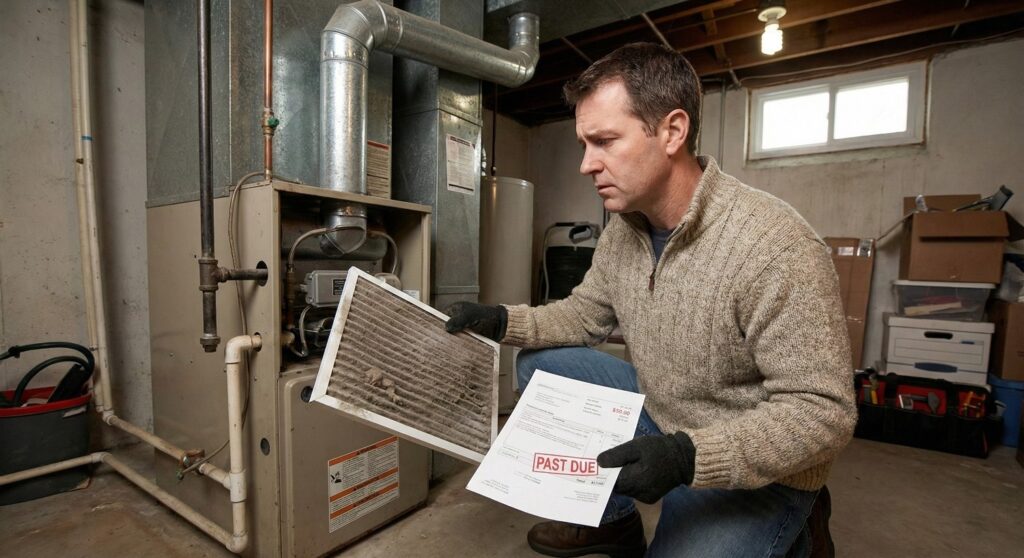
The most common and easily fixable hidden factor driving up costs is a dirty air filter. When filters become heavily clogged with dust, pet dander, and debris, your furnace or heat pump must struggle to pull air through the resistance. This forces the system to run longer and work harder to reach your desired temperature, directly increasing energy consumption. Industry standards suggest checking filters monthly and replacing them every 1 to 3 months, depending on factors like pets or allergies, to maintain proper airflow.
2. Drafty Windows and Doors
Significant heat loss occurs around windows and exterior doors that lack a proper thermal seal. These drafts act as a revolving door for energy; expensive warm air escapes while cold outdoor air seeps inside. This constant infiltration forces your heating system to run continuously to play catch-up. Applying new weatherstripping around door frames or using caulk to seal gaps around aged window casings are cost-effective DIY solutions to stop these air leaks.
3. Poor Insulation
Inadequate insulation in attics, walls, and crawl spaces turns your home into a thermal sieve. Heat naturally moves toward colder areas, meaning without a sufficient thermal barrier, the warmth you pay for simply radiates out through the roof and walls. Upgrading attic insulation to meet current recommended R-values for your specific climate zone is often cited as one of the best home insulation upgrades for seeing an immediate return on investment through lower bills.
4. Outdated or Inefficient Heating System
Like any major appliance, heating systems lose efficiency as they age. A furnace that is 15 to 20 years old might only operate at 60% to 70% Annual Fuel Utilization Efficiency (AFUE), meaning 30% to 40% of the money you spend on fuel is wasted up the flue rather than heating your home. Comparing your current model’s specifications against modern high-efficiency units, which often achieve 90% to 98% AFUE, can reveal significant potential savings through replacement.
5. Leaky Ductwork
For homes relying on forced-air systems, leaky ductwork is a major hidden energy thief. According to Energy Star sources, typical homes lose about 20% to 30% of the air that moves through the duct system due to leaks, holes, and poorly connected sections. This means heated air is being dumped into unconditioned spaces like attics, basements, or crawlspaces instead of your living areas. Sealing accessible ducts with specialized mastic sealant or metal tape can recapture this lost heat.
6. Thermostat Settings and Placement
Where your thermostat lives matters just as much as how it is set. If the unit is placed near a heat source like a lamp, television, or in direct sunlight, it will read the room as warmer than it actually is, causing the furnace to short-cycle. Conversely, placement near a drafty entryway will make it run excessively. Utilizing a programmable or smart thermostat to automatically lower temperatures when you are asleep or away is a proven strategy to reduce unnecessary run-time.
7. Blocked Vents and Registers
Walk through your home and ensure supply and return vents are not obstructed by furniture, heavy rugs, or long curtains. Blocking these vents disrupts the proper airflow balance required by your HVAC system. This increases pressure within the ductwork and forces your blower motor to work harder to circulate air. Keeping these areas clear ensures heated air circulates freely into the rooms where it is needed most.
8. Fuel Price Fluctuations
Sometimes the hidden factor isn’t inside the house structure at all, but in the volatile energy market. A sudden spike in the unit price of natural gas, heating oil, propane, or electricity will directly increase your bill even if your consumption remains exactly the same as the previous year. Reviewing the “cost per therm,” “cost per gallon,” or “cost per kWh” on your current utility bill compared to prior months or years can confirm if supply rate changes are impacting your total cost.
Frequently Asked Questions
How do I know if my heating system is inefficient? Aside from persistently rising bills, signs of inefficiency include uneven heating across different rooms, the furnace turning on and off frequently (short-cycling), or unusual noises during operation. A professional heating system efficiency check performed by a qualified HVAC technician can provide definitive answers by measuring temperature rise and analyzing combustion gases.
Is a professional energy audit worth it? Yes, for comprehensive diagnostics, it is highly valuable. A professional auditor uses advanced tools like blower door tests and infrared cameras to locate unseen air leaks and insulation gaps behind walls. While the initial investment for an “energy audit cost near me” might typically range between $300 and $500, the specific, prioritized roadmap for repairs they provide often leads to substantial long-term savings that outweigh the upfront fee.
Conclusion
When you find yourself asking, “why is my heating bill so high,” it is crucial to look beyond just the thermostat dial. By investigating these 8 hidden factors—including clogged filters, drafts, poor insulation, aging equipment, leaky ducts, thermostat placement issues, blocked vents, and market-driven fuel prices—you can pinpoint the silent drains on your wallet. Addressing these home heating efficiency issues through targeted maintenance or strategic upgrades is the most effective way to regain control over your winter energy costs.