
3 Common Insulin Injection Mistakes To Avoid
For millions managing diabetes, the daily routine of insulin administration is a lifeline. However, even experienced patients can unknowingly fall into habits that compromise their health. Insulin injection mistakes are more than just minor errors; they can lead to erratic blood sugar levels, physical discomfort, and long-term tissue damage. Understanding and correcting these common insulin injection errors is essential for ensuring that every dose works exactly as intended.
This guide identifies 3 common insulin injection mistakes to avoid, providing actionable solutions to refine your technique. From the dangers of insulin shot mistakes like needle reuse to the subtleties of site rotation, we will walk you through the best practices that ensure safety, comfort, and optimal glycemic control.
Mistake 1: Using the Same Injection Spot Repeatedly
One of the most frequent errors is the failure to rotate injection sites. It is easy to favor a “favorite” spot that is easy to reach or less sensitive, but this habit leads to a condition known as lipohypertrophy.
What is Lipohypertrophy?
Lipohypertrophy is the accumulation of rubbery, thickened, or lumpy fatty tissue under the skin caused by the anabolic action of insulin in the same location. Injecting into these hardened lumps results in unpredictable insulin absorption. The drug may be absorbed too slowly or not fully, leading to unexplained high blood sugar, or released suddenly, causing dangerous lows.
The Solution: A Strategic Rotation Plan
- Abdomen: The preferred site for consistent absorption. Inject at least two inches away from the navel.
- Thighs: Use the top and outer aspects of the thighs, avoiding the inner thigh or knee area.
- Upper Arms: The fleshy back area of the arm is excellent but often requires assistance to reach.
- Buttocks: The upper, outer area is suitable for slower absorption.
How to Rotate Effectively: Imagine a clock face or a grid on your chosen site. Move your injection point by at least one inch (about the width of a finger) for every dose. A good rule of thumb is to avoid using the exact same spot more than once a month.
Mistake 2: Reusing Needles or Syringes
In an effort to save money or reduce waste, some patients reuse their insulin pen needles or syringes. This is a dangerous practice. These devices are manufactured for single use only, and their integrity is compromised immediately after the first injection.
Why Reusing Needles is Risky:
- Dull Tips: Insulin needles are microscopic and ultra-fine. After just one use, the tip becomes dull and microscopic hooks can form. Reusing a dull needle significantly increases pain and tissue trauma.
- Infection Risk: Once a needle pierces the skin, it is no longer sterile. Reusing it introduces bacteria from your skin or the environment directly into your body, risking abscesses or infection.
- Dosage Errors: Old insulin can crystallize inside the needle, causing clogs that result in under-dosing.
The Solution: The rule is simple: use a new, sterile needle for every single injection. After use, dispose of the needle immediately in an FDA-cleared sharps container or a heavy-duty plastic container (like a laundry detergent bottle) to prevent injury.
Mistake 3: Injecting at the Wrong Depth or Angle
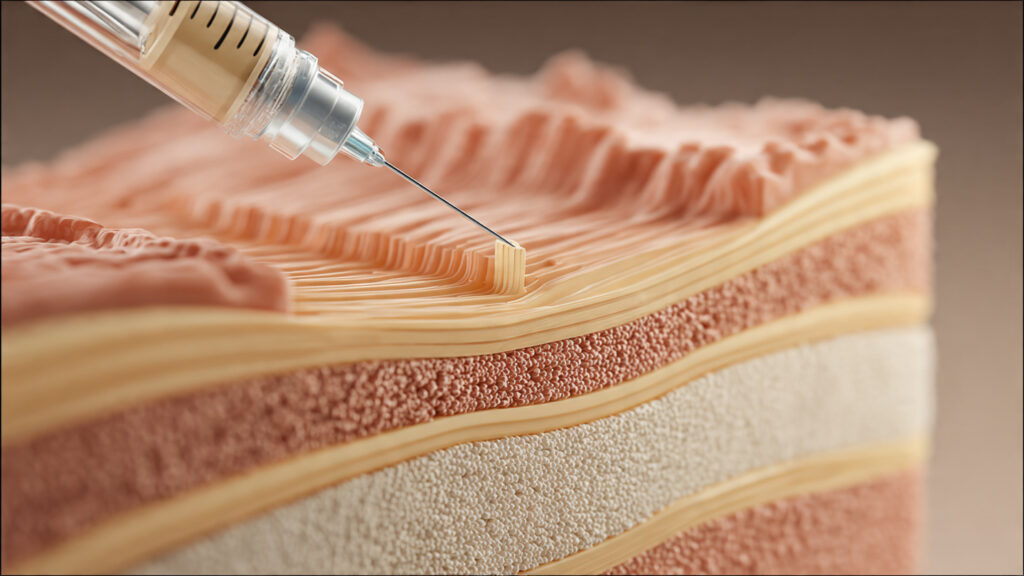
Insulin is designed to be injected into the subcutaneous fat layer, just below the skin but above the muscle. Injecting at the wrong depth is a common insulin injection mistake that alters how the medication works.
Consequences of Incorrect Depth:
- Intramuscular Injection: If the needle goes too deep and hits muscle, the insulin is absorbed much faster than intended. This can cause rapid hypoglycemia (low blood sugar).
- Intradermal Injection: If the angle is too shallow, insulin may be deposited between skin layers, causing pain and poor absorption.
The Solution: Master the Pinch and Angle
- The Pinch: Gently pinch a fold of skin (skin and fat, not muscle) between your thumb and forefinger. This lifts the fat layer away from the underlying muscle.
- The Angle: For most adults using standard 4mm to 6mm needles, a 90-degree angle (straight in) is appropriate. If you are very thin or using longer needles (8mm+), a 45-degree angle may be safer to avoid muscle.
- The Hold: After injecting, hold the needle in place for 5–10 seconds before withdrawing to ensure the full dose is delivered and prevent leakage.
Frequently Asked Questions
What is the best time to take insulin? It depends on your specific regimen. Rapid-acting insulins are typically taken 15 minutes before meals, while long-acting basal insulins are usually taken once or twice daily at the same time. Always follow your endocrinologist’s schedule.
How should I store my insulin? Unopened insulin should be kept in the refrigerator (36°F to 46°F). The pen or vial currently in use can be kept at room temperature (below 86°F) for up to 28 days. Never freeze insulin or leave it in direct sunlight or a hot car.
What should I do if my injection site bleeds a little? A tiny drop of blood means you likely nicked a small capillary. Simply press a cotton ball or tissue onto the site for a few seconds. If you experience persistent bleeding or large bruises, review your technique or needle length with your doctor.
Conclusion: Avoiding these 3 common insulin injection mistakes—neglecting site rotation, reusing needles, and improper injection depth—is critical for safe diabetes management. By committing to a fresh needle every time, rotating your sites methodically, and mastering the pinch technique, you ensure that your medication works effectively and your body remains healthy.