2026 Electric Cars for Seniors: Pricing Guide and Available Options
Picking out the right electric vehicle in 2026 involves a distinct set of priorities when you’re an older driver. Automakers are increasingly designing around things like easy entry and exit, controls that make sense at a glance, and charging routines that don’t add stress to your day. This guide walks through pricing, features, and practical considerations so seniors and their families can make a well-informed call.
The Cost-Saving Reality
A big reason seniors are drawn to electric vehicles comes down to the long-term drop in operating costs. On a per-mile basis, electricity typically costs less than gasoline, and because EVs have fewer moving parts, maintenance expenses tend to run lower over time. Between skipping oil changes, needing fewer brake replacements thanks to regenerative braking, and making fewer trips to the mechanic, those savings really pile up. That kind of difference can matter a lot for retirees managing a fixed income month to month. On top of that, federal tax incentives for qualifying new EVs are still in play for 2026 under the Inflation Reduction Act, which could knock as much as $7,500 off the purchase price depending on eligibility.
Affordable 2026 Options
Compared to prior years, affordability has improved across the 2026 EV market, which now spans a wide range of price points. Brands like Chevrolet, Nissan, and Hyundai now have entry-level models starting well under $35,000 before incentives kick in. The Chevrolet Equinox EV is a good example, staying accessible with a starting price around $34,995. As a long-standing affordable pick, the Nissan Leaf keeps delivering solid range at a competitive price. Toyota and Ford also offer mid-range options with spacious cabins and driver-assist tech for seniors after a balance of comfort and cost, without tipping into luxury-level pricing.
| Vehicle | Provider/Brand | Estimated Starting Price (2026) |
|---|---|---|
| Equinox EV | Chevrolet | ~$34,995 |
| Leaf | Nissan | ~$29,000 |
| Ioniq 6 | Hyundai | ~$38,615 |
| bZ4X | Toyota | ~$42,000 |
| Mustang Mach-E | Ford | ~$42,995 |
| Model 3 | Tesla | ~$40,240 |
Prices, rates, or cost estimates mentioned in this article are based on the latest available information but may change over time. Independent research is advised before making financial decisions.
Senior-Friendly Features
Some electric vehicles suit older drivers better than others. Wide door openings and a higher seating position that make getting in and out easier, dashboard controls that are large and clearly labeled, voice command features that cut down on touchscreen navigation while driving, and solid driver-assistance systems like automatic emergency braking, lane-keep assist, and blind-spot monitoring are where seniors tend to benefit most. The Hyundai Ioniq 6 and Toyota bZ4X, for instance, have drawn praise for roomy interiors and interfaces that don’t require a learning curve. Seat height and visibility matter too, and SUV-style EVs generally outperform low-profile sedans on those fronts.
Charging Made Simple
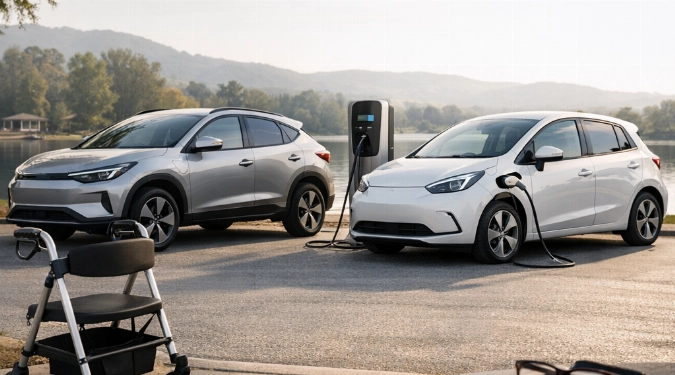
The charging process is one thing that gives a lot of seniors pause about going electric. In reality, most EV owners just charge overnight at home with a standard Level 2 charger, which a licensed electrician can install for somewhere between $500 and $1,200, unit included. That way, every day starts with a full charge, not unlike plugging in a smartphone. Public charging networks like ChargePoint, Electrify America, and Tesla Superchargers are showing up more and more in grocery store lots, pharmacies, and shopping centers, which helps if you’re in an apartment or don’t have a garage. Plug-and-charge technology on many newer EVs also authenticates the vehicle automatically, so there’s no fumbling with apps or cards, which makes the whole process a lot easier.
Making the Right Choice
As a senior driver, choosing an electric vehicle means weighing upfront cost against ongoing savings, physical comfort, and how easy the vehicle is to use. There are more options than ever in the 2026 model year, with automakers putting more thought into accessibility and intuitive design. Narrowing down the choices gets easier by test driving several models and talking to a dealership that understands what seniors need. It’s also worth looking into leasing if lower monthly payments and the flexibility to upgrade as technology advances appeal to you. Do the research, and an electric vehicle can turn out to be a practical, cost-effective, comfortable choice for drivers of any age.